
If your office doesn’t yet have an environmental policy, you’re not behind, but you are standing at a really important starting point. An environmental policy is no longer just a “nice-to-have” document tucked away in a folder. It’s a practical guide that shapes how your office uses resources, manages waste, engages employees, and shows responsibility to clients, regulators, and the wider community.
A strong environmental policy helps your office move from good intentions to consistent action. It creates clarity, accountability, and direction. But here’s the thing most people don’t talk about: a good environmental policy is not about fancy language or copying templates from the internet. It’s about relevance, practicality, and commitment.
Let’s walk through everything you should consider when developing an environmental policy for your office, in a way that actually makes sense and works in real life. Find more environment and sustainability content here.
Table of Contents

Understand Why Your Office Needs an Environmental Policy
Before writing a single word, you need to be clear on why you’re creating the policy. This may sound obvious, but many environmental policies fail because they exist only to tick a box. When the purpose isn’t clear, implementation becomes weak and inconsistent.
An environmental policy helps your office reduce its environmental footprint, comply with environmental regulations, improve operational efficiency, and build credibility with clients and stakeholders. For some offices, it’s about meeting ISO standards or ESG requirements. For others, it’s about cost savings, corporate responsibility, or aligning with company values.
When your “why” is clear, your policy becomes a living document instead of a forgotten file.
Consider When Developing an Environmental Policy for Your Office.
Assess Your Office’s Environmental Impact First
You cannot create an effective environmental policy without understanding how your office currently impacts the environment. This step grounds your policy in reality rather than assumptions.
Start by looking at key areas such as energy use, water consumption, paper usage, waste generation, procurement practices, and employee commuting patterns. For example, an office-based consultancy might discover that its biggest impacts are paper waste, electricity use, and single-use kitchen items, while a call center might identify energy consumption and electronic waste as major concerns.
Many offices conduct a simple internal environmental review using basic tools like energy bills, water bills, waste collection records, and staff observations. Tools such as plug-in energy monitors and digital scales, can help you gather accurate baseline data.
Align the Policy With Legal and Regulatory Requirements
An environmental policy should never exist in isolation from the law. One of the most important considerations is ensuring that your policy aligns with local, national, and international environmental regulations that apply to your office.
Depending on your location, this may include waste segregation requirements, plastic regulations, energy efficiency standards, or extended producer responsibility obligations. Offices that ignore this step often end up with policies that sound good but fail during audits or inspections.
By acknowledging legal compliance in your policy, you signal seriousness and responsibility. This also makes it easier to integrate the policy into compliance audits, environmental reporting, and corporate governance structures.
Define Clear Environmental Objectives and Commitments
A strong environmental policy clearly states what the office is committed to achieving. Vague statements like “we care about the environment” are not enough. Objectives should be specific, realistic, and relevant to your office operations.
For example, instead of saying “we will reduce waste,” a better commitment would be “we aim to reduce office waste sent to landfill by implementing waste separation, reducing single-use items, and promoting recycling and composting where possible.”
These commitments guide decision-making and provide a foundation for future action plans. They also help employees understand what is expected of them.
Consider Resource Use: Energy, Water, and Materials
Resource efficiency is a core pillar of any environmental policy. Offices consume significant amounts of electricity, water, paper, and office supplies, often without realizing how quickly it adds up.
Your environmental policy should address how your office intends to use resources more efficiently. This may include commitments to energy-saving practices such as switching off equipment when not in use, using energy-efficient lighting, and maintaining office equipment properly. Water-saving measures, such as fixing leaks promptly and installing water-efficient fixtures, can also be included.
When it comes to materials, policies often encourage reduced paper use, digital workflows, and responsible procurement. Offices commonly support these goals by investing in tools like reusable smart notebooks, LED desk lamps, and power strips with on/off switches.
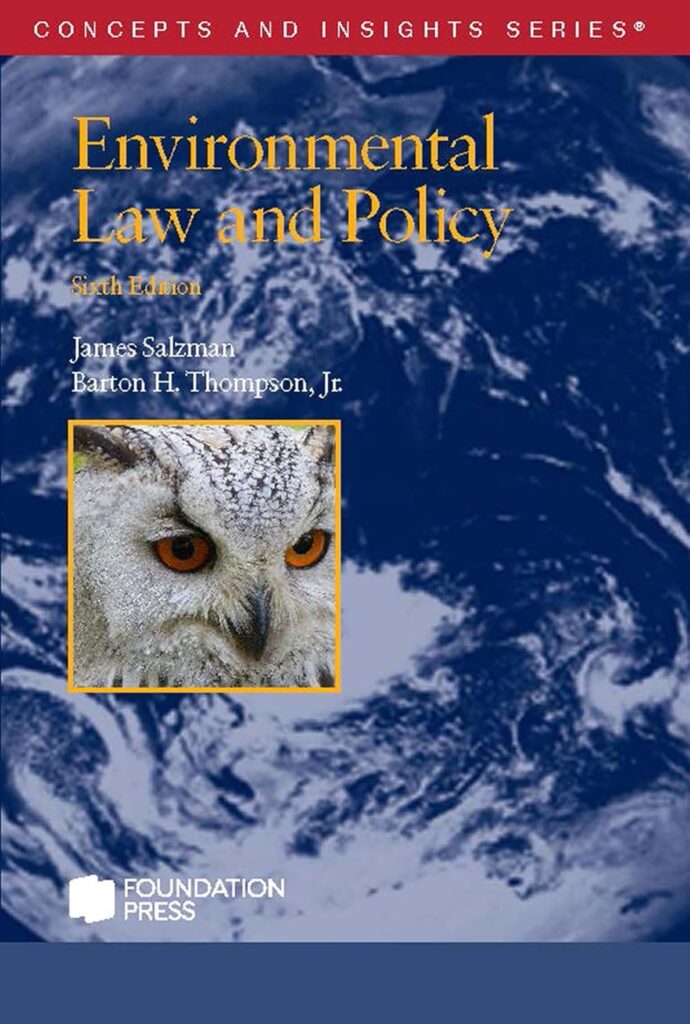
Environmental Law and Policy is a user-friendly, concise, affordable treatment of environmental law. Written to be highly readable and enjoyable rather than a dry reference source, the book provides a broad conceptual overview of environmental law while also explaining the major statutes and cases. The book includes multiple problem exercises, describing a legal or policy conflict in detail and asking students to identify and assess solutions.
Address Waste Management and Waste Reduction
Waste management is usually one of the most visible parts of an environmental policy. This is where your office outlines how it will reduce waste, reuse materials, and recycle responsibly.
A good policy considers waste streams such as paper, plastics, organic waste, electronic waste, and printer cartridges. It should encourage waste segregation at source and clearly state how different types of waste will be handled.
For example, an office may commit to eliminating single-use plastic bottles by providing water dispensers and reusable bottles for staff. Another may include proper e-waste disposal procedures for old computers and printers.
Clear labeling, color-coded bins, and visible signage play a huge role in making waste policies work. Many offices rely on recycling signage posters and labeled waste bins sourced from Amazon to support daily compliance.
Include Sustainable Procurement and Purchasing Practices
What your office buys matters just as much as how it uses resources. Sustainable procurement ensures that environmental considerations are factored into purchasing decisions.
Your environmental policy should guide the selection of office supplies, equipment, furniture, and service providers. This may include prioritizing durable products, recycled-content paper, refillable stationery, energy-efficient equipment, and suppliers with strong environmental credentials.
For example, an office might choose refillable pens over disposable ones or select printers that support duplex printing by default. Storage organizers and refillable stationery kits are commonly used by offices aiming to reduce waste from frequent replacements.
Define Roles, Responsibilities, and Accountability
One of the biggest reasons environmental policies fail is lack of accountability. If everyone is responsible, then no one is responsible.
Your policy should clearly state who is responsible for implementation, monitoring, and review. This could be an office manager, a sustainability committee, or a designated environmental officer, depending on the size of your organization.
Employees should also understand their role in supporting the policy. When responsibilities are clearly defined, it becomes easier to track progress and maintain consistency.
Engage and Train Employees
An environmental policy is only as effective as the people implementing it. Employee awareness and participation are critical.
Your policy should emphasize training, communication, and engagement. This could include induction sessions for new employees, periodic awareness campaigns, and visible reminders around the office.
For example, offices often place sustainability reminders near printers, kitchens, and waste stations. Label makers, notice boards, and reusable signage are commonly used to reinforce environmental practices without constant supervision.
Plan for Monitoring, Review, and Continuous Improvement
An environmental policy should never be static. It should evolve as your office grows, technology changes, and new environmental challenges emerge.
Your policy should state how performance will be monitored and how often the policy will be reviewed. This could involve tracking energy usage, waste reduction, or procurement improvements over time.
Regular reviews help identify what is working and where adjustments are needed. This also keeps the policy relevant and aligned with business goals.
Simple tools like whiteboards for tracking sustainability goals or digital energy monitors help offices visualize progress and maintain momentum.
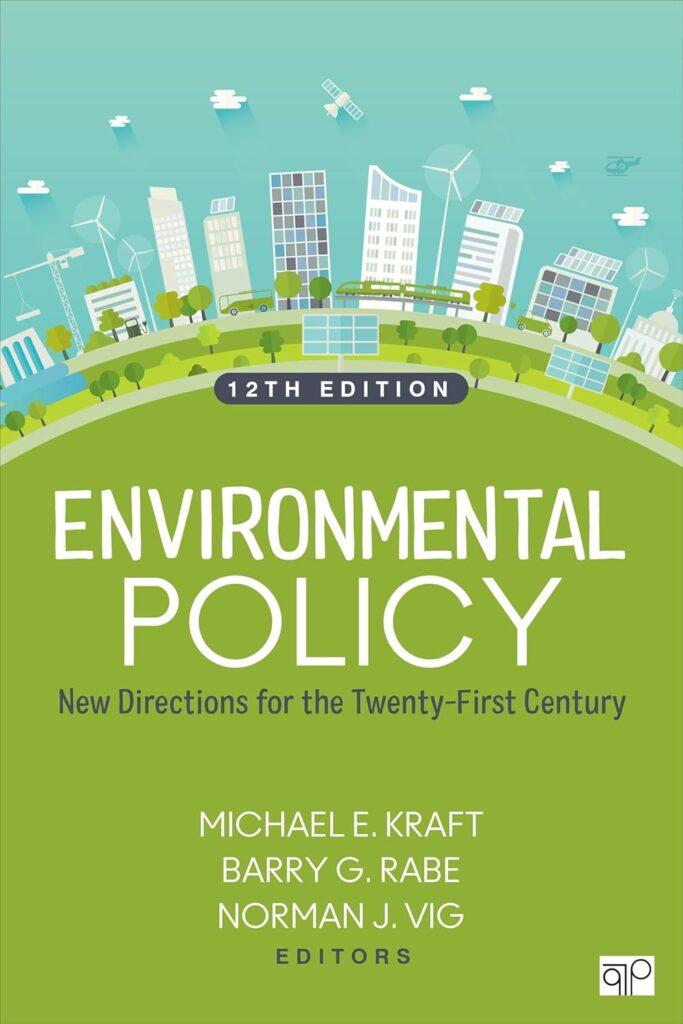
As environmental issues continue to become more prevalent in society and surrounding policy challenges become more complex, Environmental Policy once again brings together top scholars to evaluate the changes and continuities in American environmental policy since the late 1960s and their implications for current policy. Students will learn to decipher the underlying trends, institutional constraints, and policy dilemmas that shape today’s environmental politics as they evaluate approaches to future challenges.
Ensure the Policy Reflects Your Office Culture and Values
Finally, your environmental policy should feel authentic to your organization. A policy that doesn’t reflect your office culture will feel forced and will likely be ignored.
If your office values collaboration, involve employees in policy development. If innovation is part of your culture, include commitments to continuous improvement and creative solutions. Authenticity builds ownership, and ownership drives action.
In Conclusion
An environmental policy is not about sounding impressive. It’s about setting a clear direction and creating a framework for responsible decision-making. When done right, it simplifies sustainability rather than complicating it.
Start where you are, be honest about your current impact, and build a policy that supports practical action. Over time, small, consistent efforts guided by a strong environmental policy can lead to meaningful environmental and business benefits.