
Can I be honest with you for a second? There was a version of me that wore exhaustion like a badge of honor. Busy meant important. Tired meant productive. Overcommitted meant needed. And somewhere underneath all that noise, there was a quieter version of me whispering that this was not how life was supposed to feel.
Maybe you know that feeling too.
Maybe you are the woman who has been running at full speed for so long that slowing down actually feels dangerous, like if you stop pushing, everything will fall apart. Maybe you have been told, directly or indirectly, that rest is for the weak, that softness is for women who do not have real responsibilities, that a good Christian woman serves until she has nothing left and then serves some more.
If that is where you are, this post is your permission slip to put all of that down.
Because here is what I want you to know before we go any further: the soft life is not a luxury reserved for women without problems or responsibilities. It is not a reward you earn after you have suffered enough. It is not a trend you adopt when life gets easy. The soft life is a daily, intentional choice to live in alignment with how God actually designed you, to receive His grace fully, to rest in His provision, and to stop white-knuckling a life He already promised to hold.
This is not laziness dressed up in linen. This is faith dressed up in peace. Catch up on more posts about soft Christian girl living.
Let us talk about how to actually get there. But before that, check out our previous post on Christian Soft Girl Explained: What It Means and What It Doesn’t.
Table of Contents
What Does Living a Soft Life Actually Mean for a Christian Woman?
Before we get into the how, we need to get crystal clear on the what, because the soft life as the world defines it and the soft life as a Christian woman lives it are related but meaningfully different.
The world’s version of the soft life is largely about financial ease, aesthetic pleasure, not tolerating stress, and choosing comfort above all else. It is aspirational and beautiful, but it is also fragile, because it depends entirely on external circumstances cooperating with your desire for ease.
The Christian soft life is built on something completely different. It is a life of internal peace that is not dependent on external comfort. It is a life of trust so deep that you can be gentle even when things are hard. It is a life of grace so freely received that you have an endless supply to give away. It is a life of rest that is not earned by productivity but received as a gift from a Father who loves you.
Psalm 23 is the soft life manifesto in the Bible. Green pastures. Still waters. A table set for you in the middle of your enemies. Your cup overflowing. Goodness and mercy following you every day of your life. That is not a picture of a woman who has escaped hardship. That is a picture of a woman who is deeply, supernaturally cared for in the middle of it.
That is what we are building toward together.
Why So Many Christian Women Are Afraid to Choose Softness
Let us name the thing that is quietly keeping a lot of us from actually living this way, because the barriers are real and they deserve to be addressed honestly.
The fear that softness is unfaithful. Many of us grew up in church environments where busyness was practically a spiritual gift. The most respected women were the ones doing the most, serving the most, showing up the most. Choosing to slow down can feel like you are stepping back from faithfulness, when in reality you might just be stepping into a more sustainable, more God-honoring version of it.
The fear that you will be seen as selfish. Women in particular carry a deep cultural and sometimes religious conditioning that says taking care of yourself is selfish. That your needs matter less than everyone else’s. That putting yourself on the priority list is an act of spiritual failure. This is a lie, and it is one we need to lay down at the cross specifically and intentionally.
The fear that without striving, things will fall apart. This is ultimately a trust issue, and it is one that God is very gentle and very patient about working through with us. If you genuinely believe that you are the one holding everything together, then of course you cannot stop. But what if you are not? What if He is?
The belief that you do not deserve ease. This one lives deep. Some of us have an internalized narrative that says suffering is more spiritually valid than peace, that we have not earned rest, that something bad will happen if life gets too good. God wants to heal that narrative in you. You do not need to earn the soft life. You inherit it as His daughter.
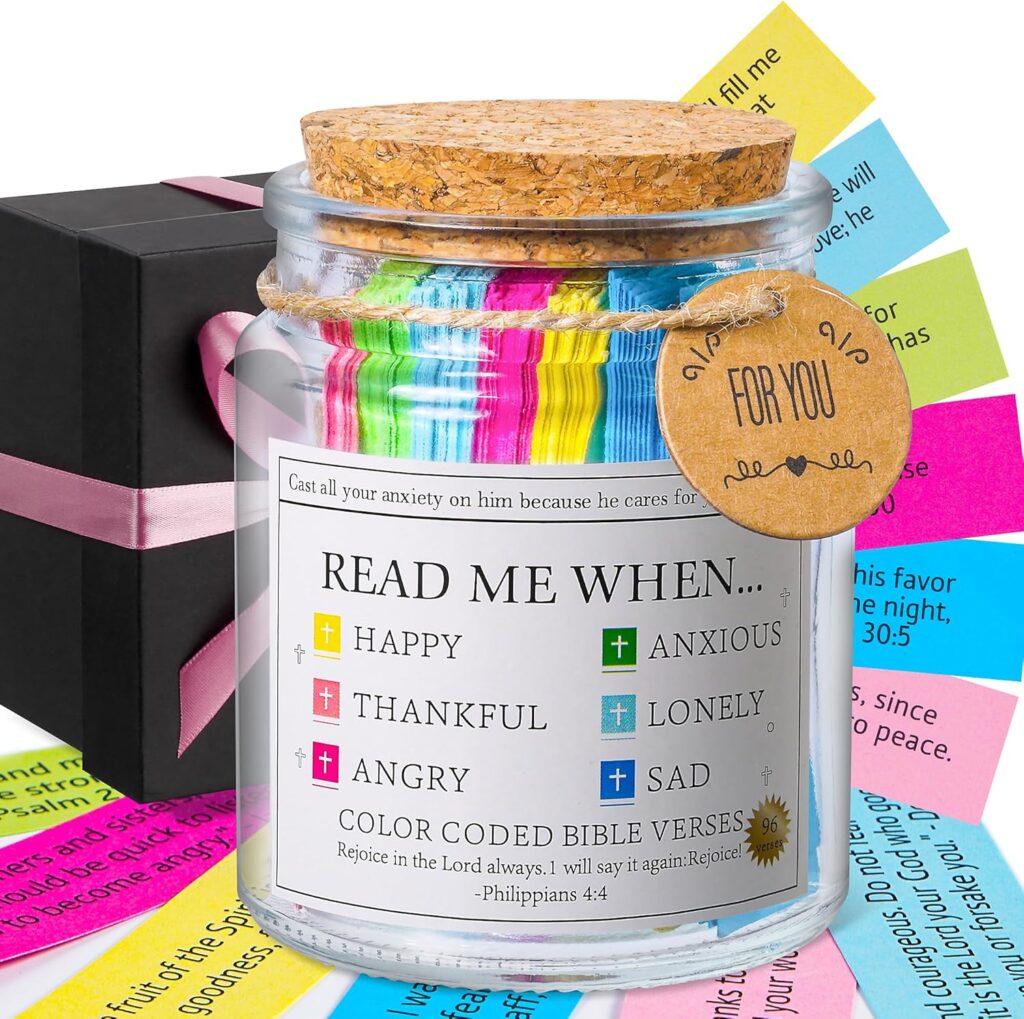
Our Bible prayer jar provides 96 selected verses covering a wide range of emotions and feelings. Whether you are looking for comfort, inspiration, or encouragement, pull a card from the Bible jar, soak up the wisdom of God and Jesus, and let these verses warm your heart and give you strength and confidence.
How to Start Living a Soft Life as a Christian Woman: Step by Step
Step 1: Establish Your Foundation in Scripture and Prayer
You cannot build a soft life on a shaky spiritual foundation. The peace, the trust, the grace that makes softness possible all flow from one source: your relationship with God. Everything else in this guide is downstream of this.
If your quiet time is inconsistent, rushed, or nonexistent, that is the first thing to address. Not with shame, but with tenderness. Start small. Genuinely small. Five minutes of prayer and one chapter of Scripture before you pick up your phone is enough to begin with. The goal is consistency and presence, not length or performance.
Consider starting your devotional practice with a guided resource that meets you where you are. Jen Wilkin’s “Women of the Word” is one of the most transformative books on how to actually study the Bible, and it changes the way you approach Scripture entirely. “Abide” by Tara-Leigh Cobble is a beautiful daily devotional that connects the whole story of Scripture in a gentle, accessible way.
Your prayer life does not need to be formal or structured to be powerful. Talk to God the way you would talk to your closest friend, openly, honestly, without rehearsed language. Bring Him your anxiety and your tiredness and your resistance to softness. He already knows. He just wants to hear it from you.
Step 2: Identify Where You Are Living Hard Instead of Soft
This step requires honesty and it requires grace, so hold both at the same time as you do it.
Grab a journal and answer these questions:
Where in your life are you striving instead of trusting? Where are you white-knuckling outcomes instead of releasing them to God? Where are you saying yes out of guilt, fear, or people-pleasing instead of genuine call or desire? Where are you running on empty and calling it faithfulness? Where are you being harsh with yourself in ways you would never be harsh with someone you love?
These are the areas where the soft life needs to be applied first. Not with a sledgehammer of change all at once, but with the steady, gentle, consistent choice to do things differently, one decision at a time.
This journaling practice is not meant to produce shame. It is meant to produce clarity. You cannot change what you cannot see. Once you can see it, you can bring it to God and begin the work of softening it.
Step 3: Build a Morning Routine That Begins with God and Ends with Yourself
The morning is where the soft life is either built or abandoned. How you begin your day sets the emotional, spiritual, and physiological tone for every hour that follows.
The Christian soft life morning routine is not complicated, but it is intentional. Here is what it looks like in practice:
Wake gently. Use a sunrise alarm clock instead of a jarring tone. The REACHER Wood Grain Sunrise Alarm Clock is a favorite for soft girl mornings because it eases you into wakefulness with gradually increasing light and gentle sound, which keeps your cortisol from spiking the moment you open your eyes.
Give God the first moments. Before your feet hit the floor, before you reach for your phone, take three deep breaths and offer a simple prayer of gratitude. Thank you for this day. I need you. Lead me. That is enough. It is an act of surrender that costs nothing and changes everything.
Protect yourself from the noise. Do not check email, social media, or news for the first 30 to 60 minutes of your day. This is not avoidance. This is stewardship of your peace. The world’s demands will reach you soon enough. Give yourself a window of quiet first.
Spend time in the Word. Even one chapter read slowly and prayerfully is more nourishing than ten chapters rushed through as a spiritual obligation. Ask God to speak to you through what you read. Then be quiet and listen.
Nourish your body. A soft life includes caring for your physical self, because your body is the temple of the Holy Spirit and it deserves to be treated accordingly. Eat a real breakfast. Drink water. Move your body gently.
Choose beauty on purpose. Do your skincare. Get dressed in something that makes you feel good. Put on worship music. Make your environment reflect the peace you are cultivating internally. These are not vain or trivial acts. They are part of honoring the life God gave you.
Step 4: Learn the Holy Practice of Saying No
This might be the hardest step in the entire guide, especially for women who have been conditioned to believe that their yes is their worth.
But hear this: Jesus said no. He walked away from crowds. He went to sleep in a storm on a boat when people needed miracles. He took Himself to quiet places repeatedly in the middle of active ministry. He did not heal everyone He encountered, not because He was not compassionate, but because He was operating from a place of divine intentionality rather than human guilt or obligation.
If the Son of God could say no, you can say no.
Learning to say no gracefully is a skill, and it starts with knowing what you are saying yes to instead. You are saying yes to your health. Yes to your family. Yes to the calling God has specifically given you. Yes to your own soul. Yes to sustainability. Yes to being able to show up fully for the things that matter most instead of showing up depleted for everything.
Some practical scripts for the recovering yes-woman:
“I am not available for that right now, but thank you for thinking of me.”
“That sounds wonderful and I need to say no in this season.”
“Let me pray about it and get back to you.” (And then only say yes if you genuinely feel led to.)
“I am at capacity right now and I want to honor the commitments I already have.”
Practice saying these out loud. It gets easier. The discomfort fades. And the freedom on the other side is extraordinary.
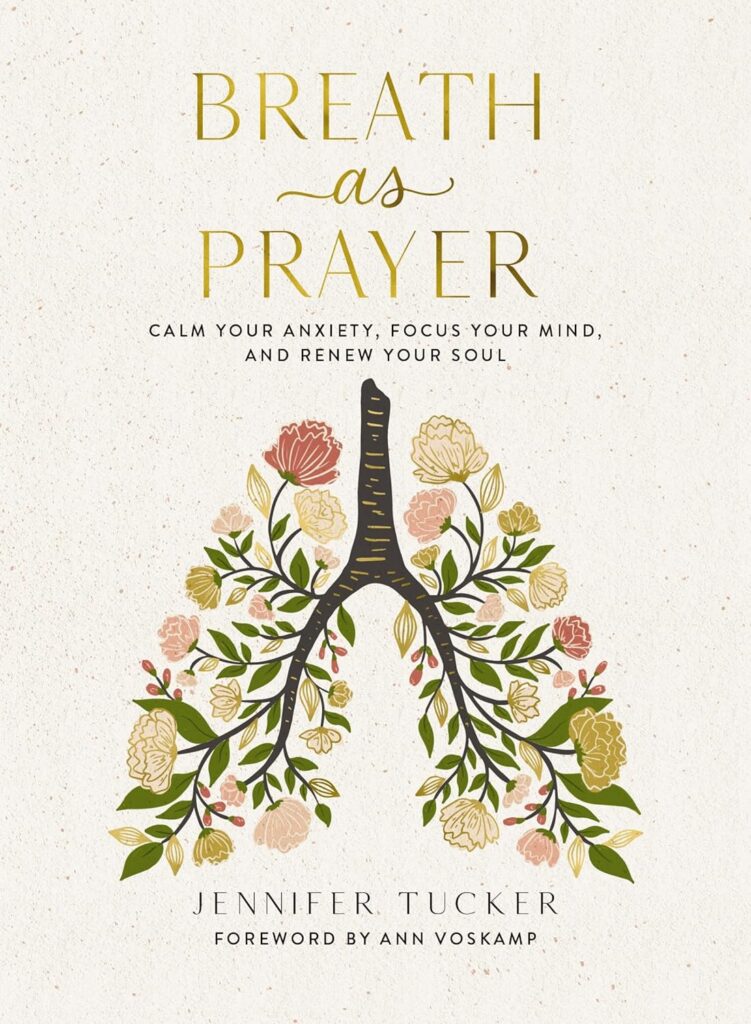
Find hope amid anxiety through the spiritual practice of breath prayer in this beautifully illustrated and practical guide to connecting body, mind, and spirit during times of stress.
Breath as Prayer will lead you through the practice and the proven health benefits of Christian breath prayer: intentional prayers centered around Scripture that focus our minds on Christ as we calm our bodies through breathing.
Step 5: Create a Home Environment That Invites Softness
Your environment shapes you. This is not a superficial observation. It is a neurological and spiritual reality. The spaces you inhabit communicate to your nervous system whether you are safe, at peace, and free to rest, or whether you are in a state of low-grade stress and overstimulation.
A Christian soft life home does not have to be expensive or perfectly decorated. It is about intentionality and sanctuary. It is about making your home a place where your soul can exhale.
Some gentle ways to soften your living environment:
Declutter with purpose. Clutter is visual noise, and visual noise creates mental noise. You do not have to do a full minimalist overhaul. Just spend 20 minutes removing things from one space that do not bring peace or serve a genuine function. Notice how the room breathes differently.
Add natural elements. Plants, fresh flowers, natural wood, soft textiles, linen, and cotton all signal safety and calm to the nervous system. A small indoor plant like a pothos or a peace lily (how fitting) is nearly impossible to kill and brings quiet life to any room.
Use scent intentionally. Scent is one of the most direct pathways to the emotional brain. A candle or diffuser with calming scents like lavender, vanilla, sandalwood, or frankincense can shift the atmosphere of a room in minutes. The Capri Blue Volcano candle is a cult classic for a reason. Mrs. Meyer’s Clean Day candles are a more affordable option that still smells absolutely beautiful.
Create a prayer corner or devotional space. This does not need to be a whole room. It can be a chair by a window, a specific corner of your bedroom, or even a tray on your bedside table with your Bible, your journal, and a candle. Having a physical space dedicated to time with God makes it easier to actually show up for it consistently.
Soften your bedroom especially. Your bedroom is where you rest and where you begin and end each day. Invest in soft, quality bedding if you can. Silk or satin pillowcases are genuinely wonderful for your skin and hair and make going to bed feel like a luxury. Keep your phone charging outside the bedroom or at least across the room so it does not colonize your first and last moments of the day.
Step 6: Tend to Your Body Like the Temple It Is
The soft life is not just spiritual and emotional. It is deeply physical. Your body carries your soul through this life, and how you treat it is a form of worship.
This does not mean you need a strict wellness protocol or an expensive supplement routine. It means choosing, consistently and lovingly, to care for your physical self with the same grace you are extending to every other area of your life.
Prioritize sleep. Sleep is one of the most important and most neglected components of a soft life. You cannot be gentle when you are chronically sleep-deprived. You cannot hear the Holy Spirit clearly when your brain is running on empty. Seven to nine hours of sleep is not laziness. It is obedience to how God designed your body. Create a wind-down routine that signals to your nervous system that the day is over and rest is safe.
Move your body joyfully. The key word is joyfully. Not punishingly. Not as atonement for what you ate. Find movement that genuinely feels good to you. Walking, Pilates, gentle yoga, swimming, dancing in your living room, hiking in nature. Choose movement that makes you feel alive and grateful for your body rather than at war with it.
Eat to nourish, not to punish or reward. The soft life relationship with food is one of gratitude and care. Prepare and eat meals that genuinely nourish your body and bring you joy. Sit down for your meals. Eat without your phone. Say grace and mean it. These small choices accumulate into a fundamentally different relationship with your body and with food.
Care for your skin and appearance with gratitude. Your skincare routine is an act of stewardship, not vanity. Cleanse, moisturize, and protect your skin from the sun daily. The basics, a gentle cleanser, a hydrating moisturizer, and a broad-spectrum SPF, are all you need to start with and are available at accessible price points.
Step 7: Cultivate Deeply Nourishing Relationships
The soft life cannot be lived in isolation. God made us relational, and the quality of our relationships is one of the single greatest factors in our overall peace, joy, and wellbeing.
Part of living softly is becoming intentional about who gets your energy, your time, and your emotional investment. This is not about being elitist or cutting people off carelessly. It is about recognizing that your capacity is finite and that tending to a few deep, reciprocal, faith-filled relationships is far more life-giving than maintaining a broad network of surface-level connections that leave you feeling more drained than filled.
Pursue friendships with women who celebrate your growth, pray for you genuinely, speak truth in love, and make space for your full self, not just the polished, performing version. These relationships do not usually form accidentally. They form when you are willing to be intentionally vulnerable, consistently present, and genuinely invested.
Be soft in your relationships. Be quick to forgive. Be slow to take offense. Choose to believe the best about people you love. Give grace generously. Ask for help when you need it, because receiving graciously is just as important as giving generously, and it takes genuine humility to do it.
Book Recommendation: “Find Your People” by Jennie Allen is one of the most practical and faith-rooted books on intentional community available right now and reads like a conversation with your wisest friend.
Step 8: Develop a Soft Relationship with Time
One of the clearest symptoms of a hard life is a frantic relationship with time. Always behind. Always rushing. Always booked. Always counting down to the next obligation before the current one is even over.
The soft life recalibrates your relationship with time from scarcity to abundance. From frantic to intentional. From packed to purposeful.
This starts with an honest audit of your calendar. Look at your commitments for the next month. Which of them are genuinely life-giving? Which are obligations you said yes to out of fear or guilt? Which serve your God-given calling and priorities? Which are simply filling space because empty space feels unsafe?
Begin to create margin intentionally. Margin is the space between your capacity and your limit. It is the white space on the page of your life, and without it, nothing can be read clearly.
Practically, this might look like scheduling no more than two commitments per day outside of work. It might look like protecting one full day per week where you have no obligations, just rest and worship and pleasure and family. It might look like building a 30-minute buffer between appointments so you are never rushing from one thing to the next.
John Mark Comer’s “The Ruthless Elimination of Hurry” addresses this in the most transformative, deeply biblical way. If you read only one book alongside this post, make it that one. It will permanently shift how you understand the relationship between hurry and spiritual health.
Step 9: Practice Receiving Grace Daily
This is perhaps the most spiritually transformative step in the entire soft life journey, and also the one that most Christian women find the hardest.
Receiving grace.
Not earning it. Not paying it back. Not minimizing it or feeling guilty about it. Just receiving it, fully and freely, the way a child receives a gift from a parent who delights in giving it.
So many of us are functionally living as though we need to prove ourselves to God. As if He is keeping track of our performance and adjusting His love accordingly. As if the grace of the cross was a lovely gesture but we still need to be very, very good to make it count.
The soft life begins when you believe, really believe, not just know theologically but feel all the way down in the marrow of your bones, that you are already loved. Already chosen. Already enough. Not because of anything you have done or will ever do, but because of who He is.
Dane Ortlund’s “Gentle and Lowly” is the book that has undone more women in the best possible way on this specific truth than almost any other. It is a portrait of the heart of Christ toward sinners and sufferers, and it is the most direct path to understanding why softness is not only possible for you but is actually who God made you to be.
Read it slowly. Underline everything. Let it break you open. The tears that come are healing ones.
Step 10: Choose Softness Every Day as an Act of Worship
Here is the truth about the soft life that nobody really tells you at the beginning: it is not a destination you arrive at. It is a practice you return to. Every single day.
There will be days when the inbox is overflowing and the kids are screaming and the deadline is looming and every instinct in you wants to white-knuckle it and go hard and push through. And on those days, choosing softness, choosing to breathe, to pray, to release control, to trust that God is still holding things even when you cannot feel it, that choice is an act of worship.
It is you saying to God, I trust you more than I trust my own striving.
It is you saying, my peace is not contingent on my circumstances.
It is you saying, I am your daughter, and I do not have to earn my place at your table.
That is the Christian soft life. Not a Pinterest board. Not a linen aesthetic. Not a morning routine or a skincare ritual or a beautifully journaled prayer. Those things are lovely and they matter, but they are the expression, not the source.
The source is Christ. The source is grace. The source is the quiet, unshakeable knowledge that you are loved by the most gentle and powerful being in the universe, and that He is for you, in every season, on every hard day, in every moment when softness feels impossible.
Start there. Return there. Build everything else on that foundation.
And watch your life become something so beautiful, so peaceful, so genuinely fruitful, that people start asking you what is different about you.
Tell them it is grace. It is always grace.

Tired of the same old birthday gifts? Meet Suhctuptx’s Christian gift baskets for women—thoughtful, uplifting, and filled with meaning, it’s the perfect way to say “you’re loved.” Wrapped in elegant warm brown tones that bring a sense of calm and comfort, this beautifully designed box carries the heartfelt message “Wishing You Something Wonderful.” A soothing, faith-inspired surprise she’ll open and instantly smile, saying, “Oh wow… this is perfect!”
A Simple Soft Life Starter Plan for the First 30 Days
If you want a practical framework to begin, here is a gentle 30-day starter plan:
Week 1: Foundation. Establish a simple morning routine that includes prayer, Scripture, water, and no phone for the first 30 minutes. Do this every day for seven days, even if everything else stays the same.
Week 2: Space. Do your calendar audit. Identify one commitment you can release or reduce. Clear one physical space in your home. Begin the book Gentle and Lowly.
Week 3: Body. Choose one way to care for your body more lovingly this week. More sleep, a daily walk, a consistent skincare routine, cooking one nourishing meal. Just one thing, done consistently.
Week 4: Relationships and Rest. Reach out to one woman you want to invest in more deeply. Schedule one completely unstructured afternoon for yourself with no obligations and no productivity. Let yourself rest without justifying it.
At the end of 30 days, reflect. How do you feel? What has shifted? What do you want to carry forward? What do you want to deepen? Let the soft life grow at its own pace, because it is a garden, not a machine.
Frequently Asked Questions About Living a Soft Life as a Christian Woman
Is the soft life compatible with being a mother or a woman with significant responsibilities? Yes, completely. The soft life is not about having no responsibilities. It is about carrying them differently. It is about receiving help, creating systems, releasing perfectionism, and building rhythms of rest into even the busiest seasons. Mothers especially need the soft life philosophy because they are often the ones most conditioned to sacrifice their own wellbeing indefinitely.
What if my church culture does not support rest and soft living? This is a real and painful tension for many women. If your church culture glorifies busyness and makes you feel guilty for choosing rest, it may be worth having a gentle conversation with leadership or seeking out community with women in your church who share your values. It is also worth examining whether your guilt is coming from culture or from genuine conviction, because those are very different things.
How do I start living softly when I am in a hard season? You start exactly where you are. A hard season does not disqualify you from the soft life. In fact, it is often in the hardest seasons that softness is most needed and most transformative. You cannot control your circumstances. You can control whether you respond to them from a place of striving or from a place of trust. Start with the smallest possible act of softness, five minutes of prayer, a cup of tea drunk slowly, one deep breath before you react, and build from there.
Does living a soft life mean I will never struggle or feel overwhelmed? No, and anyone who promises you that is selling something. The soft life does not eliminate hard things. It gives you a different foundation to stand on when hard things come. The peace of the Christian soft life is not the absence of storm. It is the anchor that holds in the middle of one.
Can a single woman live a soft life? Beautifully and fully, yes. The soft life is not about partnership or domesticity. It is about your relationship with yourself, with God, and with the life He has given you right now, in this exact season. A single woman living softly is one of the most powerful witnesses to the sufficiency of Christ available today.
Share this post with a friend who needs permission to slow down, save it for the next time life tries to make you hard again, and remember: softness is not weakness. For a woman rooted in Christ, softness is the most powerful thing she can possibly be.