
If your facility operates under an Environmental Impact Assessment (EIA) License in Kenya, an Environmental Audit (EA) is not optional. It is a statutory obligation. Section 68 of the Environmental Management and Co-ordination Act (EMCA) requires that all operating projects undertake periodic Environmental Audits to determine the level of compliance with environmental laws and license conditions.
This requirement is operationalized under Regulations 31–34 of the Environmental Impact Assessment and Audit Regulations, which outline how Environmental Audits must be conducted, documented, and submitted.
Yet despite this clear legal framework, many businesses misunderstand what an Environmental Audit truly entails. Some treat it as a routine administrative submission. Others see it as an annual formality. In reality, an Environmental Audit is a comprehensive compliance assessment designed to evaluate whether a project is operating within approved environmental parameters. Find more posts related to environmental audits here.
Table of Contents
Understanding the Legal Foundation of Environmental Audits
Environmental Audits in Kenya are grounded in a structured regulatory system. Section 68 of EMCA establishes the obligation for periodic audits of ongoing projects. It empowers regulators to ensure that projects comply with environmental safeguards throughout their operational life, not just at approval stage.
The Environmental Impact Assessment and Audit Regulations (2003) go further by requiring that:
- Audits be conducted by a registered and licensed NEMA expert
- The audit evaluates implementation of the Environmental Management Plan (EMP)
- The report be submitted to the Authority for review and approval
- Non-compliance be identified with corrective action recommendations
What to Review During an Environmental Audit
A proper Environmental Audit examines both documentation and physical site conditions. It compares what was approved in the EIA with what is actually happening on the ground. Below is a structured breakdown of what must be assessed.
1. Compliance With EIA License Conditions
Every EIA License issued by NEMA contains specific conditions that the proponent must comply with during operation. These conditions may relate to waste handling, emissions, effluent discharge, noise control, monitoring frequency, reporting obligations, and mitigation implementation.
During the audit, the licensed expert must verify:
- Whether operations remain within the scope approved in the EIA
- Whether there have been expansions or process changes without license variation
- Whether all license conditions are implemented and documented
- Whether required mitigation measures are functional
A common compliance issue arises when facilities expand capacity or modify processes without seeking formal approval. Even operational changes that appear minor may trigger the need for license variation. An Environmental Audit must clearly indicate whether the facility is operating within its legally approved scope.
2. Environmental Management Plan (EMP) Implementation
The Environmental Management Plan (EMP) forms the backbone of environmental control for the project. Under the Environmental Impact Assessment and Audit Regulations (2003), an audit must evaluate how effectively the EMP is being implemented. This involves assessing:
- Whether mitigation measures are active
- Whether monitoring schedules are followed
- Whether environmental responsibilities are assigned
- Whether environmental records are maintained
- Whether corrective actions are documented
Many projects submit comprehensive EMPs during the EIA stage but fail to operationalize them effectively. An Environmental Audit bridges this gap by measuring implementation performance rather than theoretical commitments. The question auditors ask is simple: Are environmental safeguards functioning as intended?
3. Waste Management Compliance
Waste management remains one of the most scrutinized areas of environmental compliance in Kenya. The Waste Management Regulations establish requirements for waste segregation, storage, transportation, and disposal. During the Environmental Audit, the following must be reviewed:
- Segregation of waste streams
- Labeling and storage conditions
- Use of licensed waste transporters
- Disposal at approved facilities
- Record-keeping and tracking documentation
- Handling procedures for hazardous waste
Even when facilities dispose of waste correctly, poor documentation often results in non-compliance findings. Waste tracking forms, transporter licenses, and disposal receipts must be available and up to date. Regulators increasingly focus on traceability, being able to demonstrate where waste originates and where it ends up.
4. Effluent and Water Discharge Compliance
If a facility treats and discharges wastewater into a public sewer, river, or environment, it must comply with the Water Quality Regulations. An Environmental Audit must verify:
- Valid effluent discharge license
- Operational status of wastewater treatment systems
- Compliance with discharge limits
- Monitoring frequency and record-keeping
- Maintenance of treatment infrastructure
Failure to renew a discharge license or maintain treatment systems is a serious compliance issue and may trigger enforcement action. Auditors must also ensure that discharge points align with approved locations.

In this book, author Lawrence B. Cahill, a veteran with over 25 years of industry experience, provides all the information needed to conduct audits and manage an EH&S auditing program. He discusses new developments in information generation and availability, including ISO 14000 auditing guidelines, auditing dilemmas, and auditing tips. He provides several tools for building a successful audit program, including an EH&S audit program manual, a pre-audit questionnaire, a pre-audit checklist, an EH&S audit opening conference presentation, an environmental audit report, an EH&S audit appraisal questionnaire, and a management report.
5. Air Emissions Compliance
Facilities operating boilers, generators, furnaces, or industrial processes must comply with the Air Quality Regulations. The Environmental Audit must evaluate:
- Emission control technologies
- Equipment maintenance records
- Compliance with permissible emission limits
- Monitoring documentation
Air emissions are particularly sensitive in industrial zones adjacent to residential areas. Complaints often prompt inspections, making this an important risk area.
6. Noise Compliance
Operational noise must align with permissible limits under the Noise and Excessive Vibration Pollution Regulations. The audit must confirm:
- Operational noise levels
- Compliance with designated area thresholds
- Existence of noise mitigation measures where required
Noise compliance is often overlooked until complaints arise. However, non-compliance can result in closure notices.
Essential Attachments for an Environmental Audit Report
An Environmental Audit Report must be evidence-based. Regulators assess both narrative content and supporting documentation.
Essential attachments typically include:
- Copy of valid EIA License
- Previous Environmental Audit acknowledgement letter
- Updated Environmental Management Plan (EMP)
- Waste transporter licenses
- Waste disposal tracking forms
- Effluent discharge license
- Environmental monitoring logs
- Photographic evidence of mitigation measures
- OSHA Certificate
- Staff environmental training records
- Copy of valid NEMA Expert License
The inclusion of the NEMA Expert License is mandatory because Environmental Audits must be conducted and submitted by a registered and licensed environmental expert under the Environmental Impact Assessment and Audit Regulations (2003). Incomplete documentation often results in requests for resubmission, delaying compliance approval and increasing regulatory exposure.
Why Environmental Audits Should Be Treated Strategically
Environmental compliance in Kenya is becoming increasingly structured and digitalized. Regulatory oversight is more systematic, and documentation gaps are easier to detect. An Environmental Audit should not be approached as a routine administrative task. It should be viewed as:
- A compliance verification mechanism
- A legal risk mitigation tool
- A governance safeguard
- A sustainability reporting instrument
Organizations that treat Environmental Audits strategically tend to avoid abrupt enforcement actions. Those that treat them casually often encounter preventable regulatory challenges.
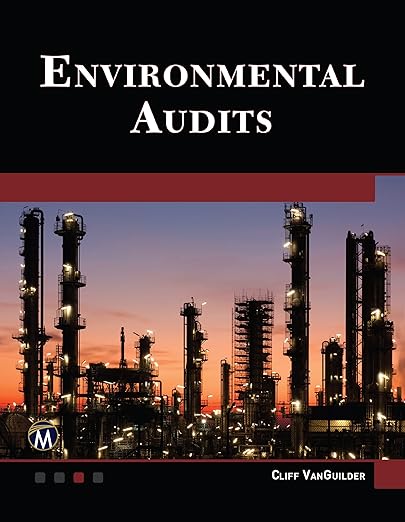
It explains the audit process, from planning, to the actual audit, to the evaluation of results, and necessary corrections. The primary emphasis is on condensing the numerous volumes of environmental laws, rules, and regulations into a brief and understandable series of questions and case studies. These audits also contain USEPA checklists for source reduction, waste minimization, reuse, and recycling before waste disposal. The audits encompass water, air, solid waste, remediation, chemical and petroleum bulk storage, and many health and safety requirements.
Conclusion
Environmental Audits are a statutory obligation under Section 68 of the Environmental Management and Co-ordination Act (EMCA). They serve as a structured evaluation of environmental compliance and operational responsibility.
A thorough audit examines license compliance, EMP implementation, waste management, water discharge, air emissions, and noise control. It must be supported by proper documentation and conducted by a licensed NEMA expert.