Have you ever looked in the mirror and felt a quiet, unsettling distance from the person looking back? You move through your days, fulfilling roles: employee, partner, friend, parent, but underneath, there’s a whisper: “Who am I, really, when no one needs anything from me?” You feel untethered, like a compass spinning without finding north.
This feeling of being lost isn’t a failure; it’s often the soul’s signal that a deeper chapter of self-discovery is ready to begin. The old maps you’ve been using, others’ expectations, societal definitions of success, past versions of yourself, no longer match the terrain of your inner world.
In these times, you don’t need a loud, prescriptive guide. You need a companionable, wise presence that helps you listen to your own quiet voice. The following five books are exactly that. They are not manuals for a quick fix, but lanterns to help you walk your own path home to yourself. Find more books to read or add to your to read list here.
Table of Contents

5 Books to Read when you Feel Lost
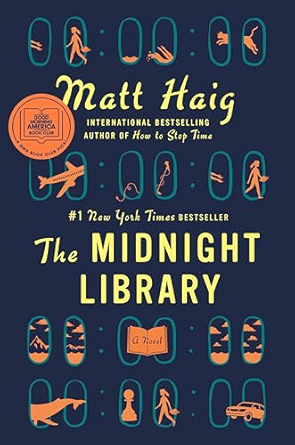
1. The Midnight Library by Matt Haig
Let’s start with a novel, because sometimes we need story to understand our own soul. In The Midnight Library, Nora Seed finds herself in a library between life and death, where each book allows her to try out a different version of the life she could have lived. It’s a breathtaking exploration of regret, choice, and the essence of a life well-lived.
Why It’s the Perfect Companion When You’re Lost:
When we feel untethered, we often drown in a sea of “what ifs” and regret over paths not taken. This novel visually embodies that feeling, then guides you through it with profound empathy. It asks the central question haunting anyone who feels lost: “What is the best way to live?” By walking alongside Nora, you get to explore that question safely, without the weight of your own decisions.
What Makes It Uniquely Healing:
Matt Haig, who has written openly about his own struggles with depression and anxiety, infuses the story with a deep understanding of despair and the search for meaning. The book doesn’t offer a single, preachy answer. Instead, it suggests that meaning isn’t found in a perfect, unlived life, but in the appreciation and potential of the one you already have. It helps quiet the noise of infinite possibilities so you can hear your own heart.
A Small Practice from Its Pages:
Try the “One Gratitude for This Timeline” Exercise. Instead of focusing on the life you don’t have, write down one specific, small thing that is only possible because of the exact sequence of events in your life. (e.g., “Because I took that job I hated, I met my best friend.”). This practice gently anchors you in the value of your own unique, unchangeable story.
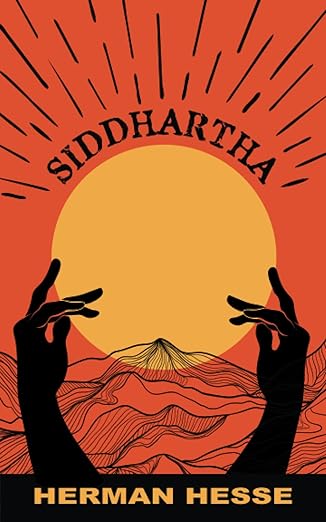
2. Siddhartha by Hermann Hesse
This timeless, slender novel is a masterclass in the journey of self. It follows a man, Siddhartha, in ancient India as he abandons pre-set paths: asceticism, sensual pleasure, wealth, spiritual doctrine, in a relentless, personal pursuit of enlightenment and self-knowledge.
Why It’s the Perfect Companion When You’re Lost:
Siddhartha’s journey is the archetype of feeling lost. He repeatedly reaches a point of mastery or satiation only to find a hollow emptiness, a feeling that the true self is still elusive. This book validates that being lost is not a detour; it is the essential path. It teaches that self cannot be taught by others; it must be experienced, often through suffering, mistake, and direct encounter with the world.
What Makes It Uniquely Healing:
In a world of quick fixes and “5-step plans to find your purpose,” Siddhartha is a patient, poetic antidote. It argues that wisdom comes from listening to the river, to your own failures, to the love in your heart. It re-frames your period of being lost as a sacred, necessary wandering. You are not failing; you are, like Siddhartha, shedding skins that no longer fit.
A Small Practice from Its Pages:
Practice “Listening Like the River.” Find a quiet spot near moving water: a stream, river, or even a recording. Sit and simply listen. Don’t analyze or think. Just absorb the sound of constant flow and change. As you listen, ask yourself internally: “What is one thing I am currently holding onto that needs to flow on?” The answer often arises from a place deeper than thought.
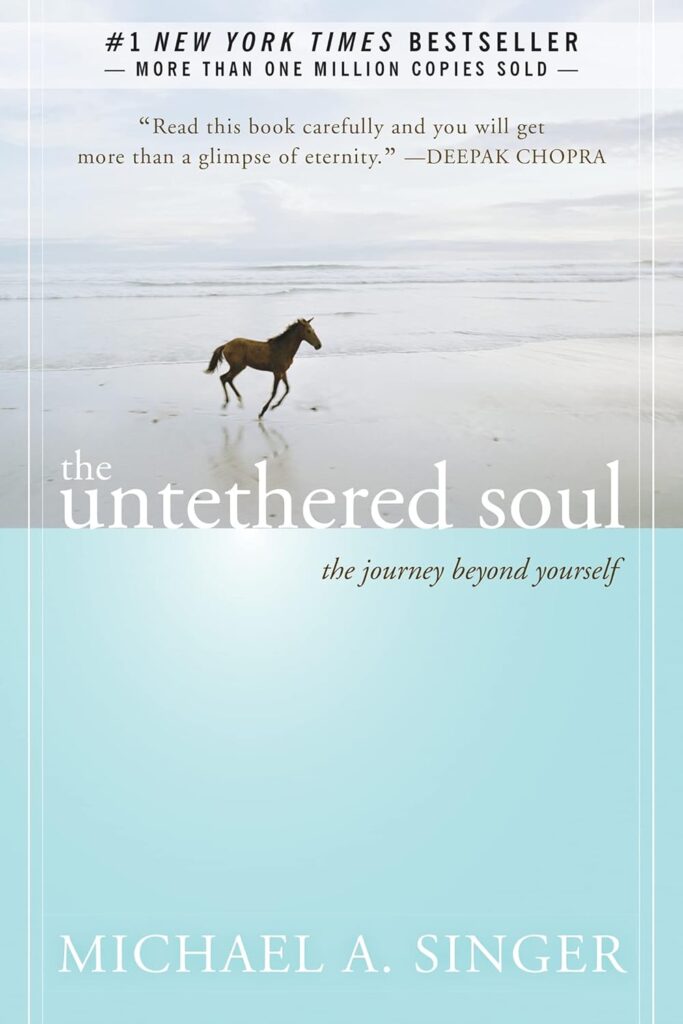
3. The Untethered Soul: The Journey Beyond Yourself by Michael A. Singer
Where do you look when you feel lost? Usually, outward for answers or inward at the swirling storm of thoughts and emotions. Michael A. Singer offers a revolutionary third option: to become the aware space watching the storm, not the storm itself.
Why It’s the Perfect Companion When You’re Lost:
This book provides the single most useful tool for self-discovery: distinguishing between your “self” and your thoughts/emotions. When you’re lost, you’re often identified with a chaotic inner narrative (“I’m a failure,” “I don’t know what to do”). Singer gently guides you to take a seat behind the constant commentary, to realize you are the conscious observer of it all. This creates instant, profound peace and clarity.
What Makes It Uniquely Healing:
The book is a direct, conversational, and logical guide to inner freedom. It uses simple analogies like imagining yourself as the sky, and your thoughts as passing weather, that permanently alter your perspective. It doesn’t ask you to change your life circumstances first; it shows you how to change your relationship to your inner experience, which is the root of feeling found.
A Small Practice from Its Pages:
Do the “Inner Roommate” Exercise. For one day, imagine that your constant stream of thoughts and worries is not you, but a nervous, chatty roommate living in your head. Your job is not to argue with them or believe everything they say, but simply to note, “Oh, there’s my roommate talking again.” This creates the critical distance needed to find the real, quiet you underneath.
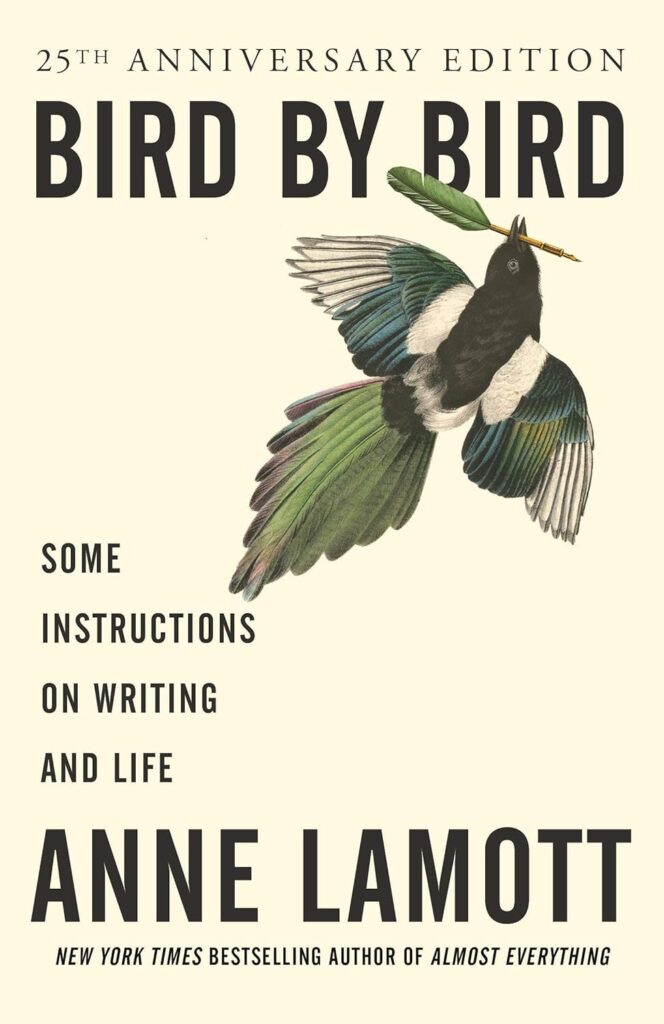
4. Bird by Bird: Some Instructions on Writing and Life by Anne Lamott
On the surface, this is a book about writing. At its glorious, messy, hilarious heart, it is a book about finding your voice, facing the chaos within, and creating meaning one step at a time. Anne Lamott’s timeless advice to writers is, in truth, the best advice for anyone trying to find their way.
Why It’s the Perfect Companion When You’re Lost:
Being lost often feels like a blank page: terrifying, full of potential, and paralyzing. Lamott gives you permission to be a mess. She champions the “shitty first draft,” both in writing and in life. She argues that you discover what you think, who you are, and what you believe through the act of trying, not by waiting for perfect clarity. This book is a permission slip to start where you are.
What Makes It Uniquely Healing:
Lamott’s tone is like a conversation with the wisest, funniest friend you have. She is radically honest about jealousy, fear, and self-doubt. Her famous chapter on “Short Assignments” (taking life “bird by bird” instead of being overwhelmed by the whole flock) is a life strategy for existence. It teaches you that the path to finding yourself is built by paying close, loving attention to the very next small thing.
A Small Practice from Its Pages:
Embrace “Short Assignments.” Overwhelmed by the question “Who am I?”? Break it down. Today, your assignment is simply: “Notice one thing that brings me a flicker of joy.” Tomorrow: “Write one paragraph, just for me, about a childhood memory that feels significant.” You find your shape not in a grand revelation, but in the accumulation of these tiny, honest moments.
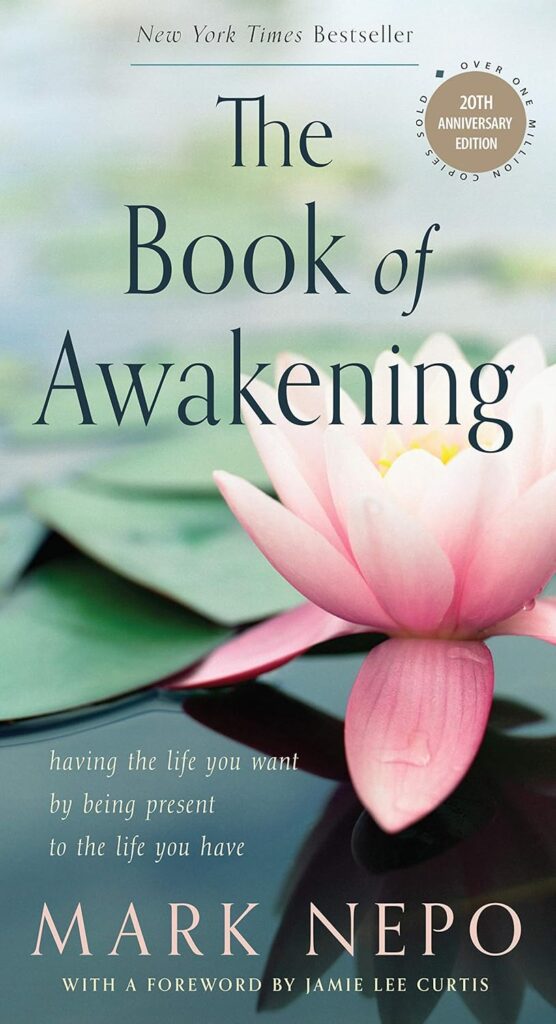
5. The Book of Awakening: Having the Life You Want by Being Present to the Life You Have by Mark Nepo
This is not a book to read cover-to-cover, but a daily companion for the journey. Philosopher-poet Mark Nepo offers a year’s worth of dated, one-page meditations following his own journey through cancer and spiritual seeking. Each entry includes a story, a reflection, and a simple practice.
Why It’s the Perfect Companion When You’re Lost:
When you’re unmoored, the idea of “finding yourself” can feel like a massive, daunting project. This book breaks that quest into digestible, daily moments of presence. You don’t have to know where you’re going; you just have to show up for today’s page. It meets you exactly where you are, in whatever mood you’re in, with unwavering gentleness.
What Makes It Uniquely Healing:
Nepo’s words feel like water for a parched soul. He speaks of “being found,” not “finding.” The distinction is everything. It suggests that the self isn’t hidden somewhere to be uncovered through striving, but is revealed in the soft, open moments when we stop searching and simply are. This book creates a daily ritual of return to your own heart.
A Small Practice from Its Pages:
Try today’s “Guided Pause.” Open the book to today’s date. Read the entry slowly. Then, set a timer for five minutes and do nothing but follow the simple practice at the end (e.g., “Hold a small stone and feel its history.”). This daily act is a direct line back to yourself, a tether in the form of a few quiet, intentional minutes
You Are Not Lost; You Are in the Process of Being Found
The feeling of being lost is not a permanent state. It is the fertile, necessary ground where the old self dissolves so the truer self can emerge. Be gentle with yourself in this space.
Let one of these books be your starting point. Read it not to “fix” yourself, but to keep company with a wise voice that reminds you: the compass you seek is not outside. It is your own breath, your own attention, your own willingness to sit with the question. Your path home is made by walking it, one small, authentic step at a time. Begin here.