If you’re reading this, you might be feeling a quiet sense of longing. You scroll through social media seeing groups of friends laughing together, or you finish a long work week realizing your only conversations were transactional. You crave something more; a friend who gets you, who you can call at 2 p.m. or 2 a.m., who makes you feel truly seen. You’re not just looking for an acquaintance; you’re seeking a meaningful connection.
In a world that often prizes quantity over quality and digital likes over real-life presence, building profound friendships can feel confusing. We assume it should happen naturally, and when it doesn’t, we blame ourselves. What if you had a guide? Not a generic self-help manual, but a collection of profound, research-backed, and beautifully written books that act as mentors.
The following five books are my handpicked, slightly-lesser-known companions for this journey. They don’t just tell you to “put yourself out there.” They give you the blueprint, the science, and the courage to build the community your soul is yearning for. Find more books to read or add to your to read list here.
Table of Contents
5 Exceptional Books to Help You Cultivate Deep, Lasting Friendships.
1. Platonic: How the Science of Attachment Can Help You Make and Keep Friends by Dr. Marisa G. Franco
Let’s start with the book that feels like a warm, smart hug from your future best friend. Dr. Marisa Franco, a psychologist and professor, tackles the modern friendship crisis not with fluff, but with groundbreaking science on adult attachment.
Why It’s a Game-Changer:
This book dismantles the most painful myth: that your friendship struggles are a personal failure. Franco brilliantly applies attachment theory, usually reserved for romantic relationships to friendship. She explains that your style (anxious, avoidant, or secure) dictates how you seek and maintain connections. If you’ve ever felt clingy, distant, or confused about why friendships fizzle, this book offers the “aha!” moment of understanding. It’s not you; it’s your wiring and it can be rewired.
What Makes It Unique:
Franco translates robust academic research into incredibly practical strategies. She provides actionable steps for everything from initiating a friendship (“The Two-Week Rule” for follow-ups) to deepening vulnerability (“The Michelangelo Phenomenon,” where good friends help sculpt our best selves). This book is your friendly, PhD-holding guide through the awkward, beautiful process of building bonds.
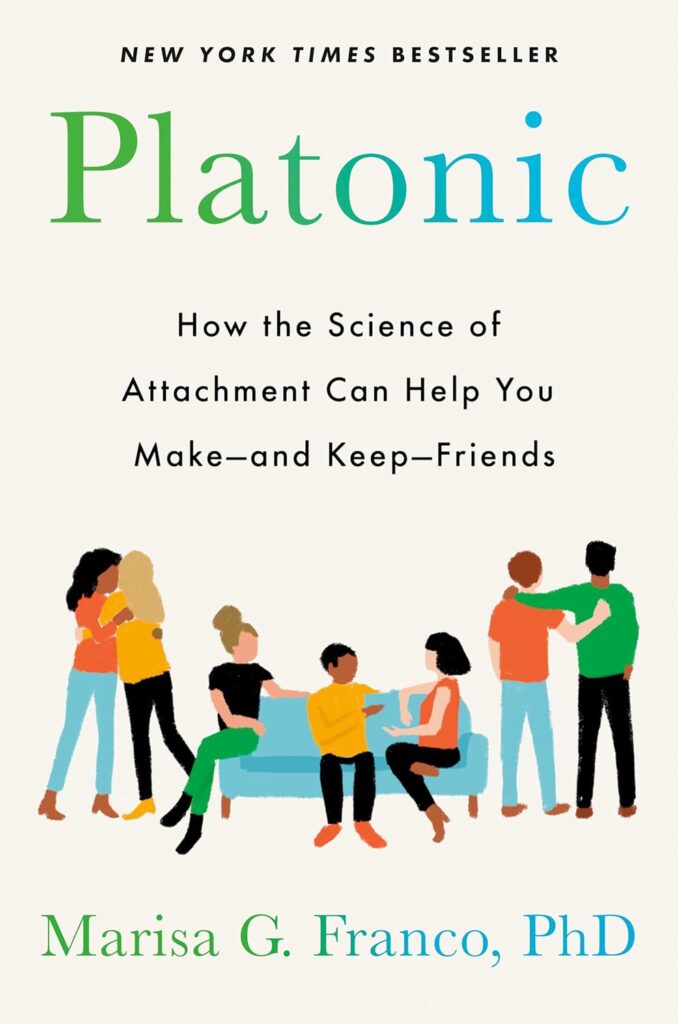
Making new friends, and deepening longstanding relationships, is possible at any age—in fact, it’s essential. The good news: there are specific, research-based ways to improve the number and quality of your connections using the insights of attachment theory and the latest scientific research on friendship. Platonic provides a clear and actionable blueprint for forging strong, lasting connections with others—and for becoming our happiest, most fulfilled selves in the process.
A Small Practice from Its Pages:
Try the “Risky Self-Disclosure.” In your next conversation with a potential friend, share something slightly personal but not overwhelming, a hope, a mild insecurity, or a quirky passion. Franco’s research shows that appropriate vulnerability is the fastest track to building trust and intimacy. It invites the other person to match your level of openness.
2. Friendship: The Evolution, Biology, and Extraordinary Power of Life’s Fundamental Bond by Lydia Denworth
What if I told you your need for friendship is as biologically crucial as your need for food and water? Science journalist Lydia Denworth presents friendship not as a social luxury, but as a biological imperative for survival, backed by fascinating research across species, from baboons to humans.
Why It’s a Game-Changer:
This book gives you permission to prioritize friendship without guilt. Denworth compiles decades of scientific studies showing that strong social bonds lower blood pressure, strengthen our immune systems, reduce chronic pain, and even lengthen our lifespans. When you feel that deep ache for connection, it’s not “neediness”, it’s your body’s ancient, intelligent survival signal asking you to tend to your social world.
What Makes It Unique:
By tracing the “science of friendship” through evolution and neurobiology, Denworth makes the case on a fundamental level. You’ll learn about the “friendship hormone” oxytocin, how our brains are literally built for social connection, and why isolating yourself is one of the most harmful things you can do to your health. This knowledge transforms friendship from a hobby into a non-negotiable pillar of wellness.
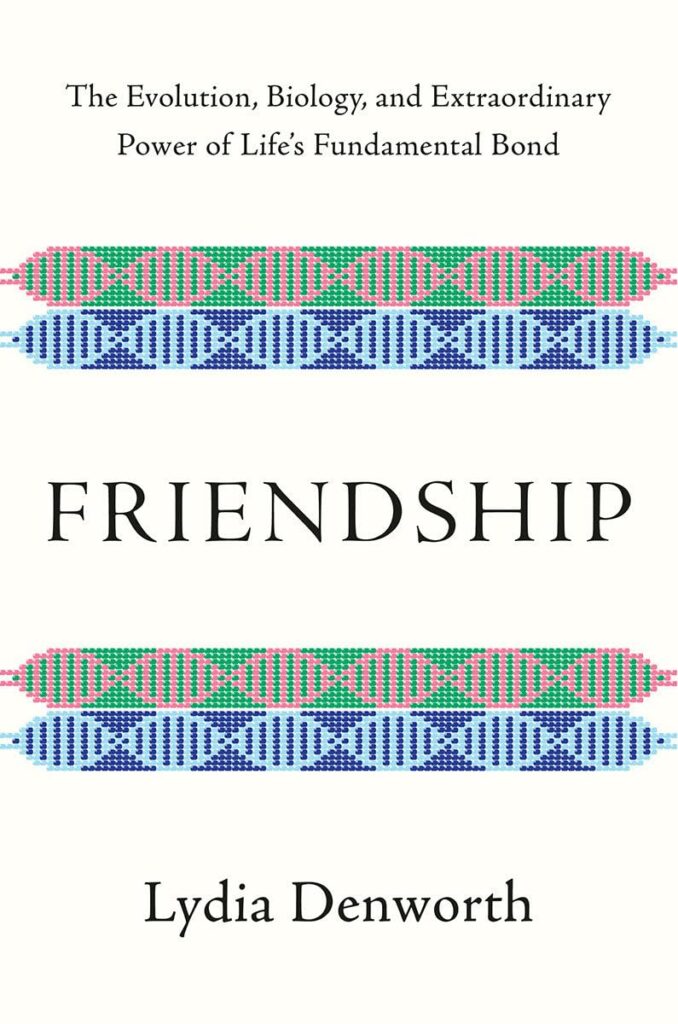
In Friendship, science journalist Lydia Denworth takes us in search of friendship’s biological, psychological, and evolutionary foundations. She finds friendship to be as old as early life on the African savannas―when tribes of people grew large enough for individuals to seek fulfillment of their social needs outside their immediate families.
Denworth sees this urge to connect reflected in primates, too, taking us to a monkey sanctuary in Puerto Rico and a baboon colony in Kenya to examine social bonds that offer insight into our own. She meets scientists at the frontiers of brain and genetics research and discovers that friendship is reflected in our brain waves, our genomes, and our cardiovascular and immune systems; its opposite, loneliness, can kill. At long last, social connection is recognized as critical to wellness and longevity.
A Small Practice from Its Pages:
Conduct a “Friendship Audit.” Denworth emphasizes quality over quantity. List the people in your life. Who makes you feel energized and safe? Who drains you? Gently assess which relationships are worth investing more time in, and which might need healthier boundaries. Direct your precious social energy toward bonds that offer mutual, positive biology-boosting effects.
3. The Village Effect: How Face-to-Face Contact Can Make Us Healthier, Happier, and Smarter by Susan Pinker
In our digital age, we’ve confused connection with contact. Developmental psychologist Susan Pinker presents a compelling argument: our screen-based lives are making us profoundly lonely, and the cure is deliberate, in-person community, our modern “village.”
Why It’s a Game-Changer:
Pinker doesn’t just theorize; she visits some of the world’s “Blue Zones” (places where people live the longest, healthiest lives) to uncover their secret: dense, daily, face-to-face social interaction. Her work proves that a quick text or like cannot replicate the complex neurochemical exchange that happens when we share physical space. This book is a urgent, gentle nudge to get offline and into each other’s lives.
What Makes It Unique:
The book is packed with startling data (like how social integration is a bigger predictor of lifespan than smoking or obesity!) but reads like a series of fascinating stories. She shows how a local cheese shop, a Sardinian village, or a regular bridge game acts as social glue. It provides a clear-eyed critique of our digital habits while offering joyful, tangible alternatives for building your own village.
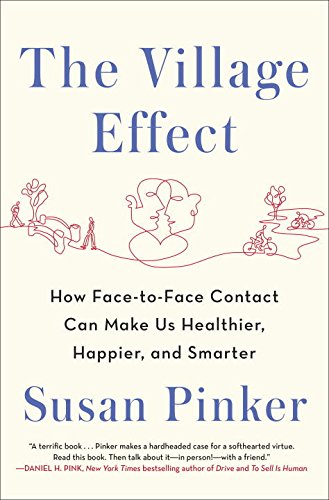
In her surprising, entertaining, and persuasive new book, award-winning author and psychologist Susan Pinker shows how face-to-face contact is crucial for learning, happiness, resilience, and longevity.
A Small Practice from Its Pages:
Create a “Micro-Village Moment.” Commit to one small, regular, in-person ritual. It could be a weekly coffee with a colleague, joining a book club at your local library, or simply chatting with your favorite barista. The key is consistency and presence. These small touches build the fabric of a supportive community around you, stitch by stitch.
4. Dare to Lead: Brave Work. Tough Conversations. Whole Hearts. by Brené Brown
You might wonder, “A leadership book for friendship?” Absolutely. Brené Brown’s research on courage, vulnerability, and trust is the masterclass for any relationship. Dare to Lead takes the core principles from her famous TED Talks and provides the specific, actionable language for practicing brave connection.
Why It’s a Game-Changer:
True friendship cannot exist without vulnerability and clear boundaries, two things we are rarely taught how to navigate. Brown gives you the tools. She provides the literal sentences to use for having hard conversations (“The story I’m telling myself is…”), setting boundaries (“Here’s what’s okay for me, and here’s what’s not”), and giving honest feedback. This book turns abstract concepts into a practical playbook for being a better, braver friend.
What Makes It Unique:
Brown focuses on “rumbling with vulnerability”, staying in a difficult, honest conversation instead of shutting down or armoring up. This skill is the bedrock of deep friendship. The book is filled with relatable examples and clear strategies that move you from fearing conflict to seeing it as the birthplace of intimacy and trust.
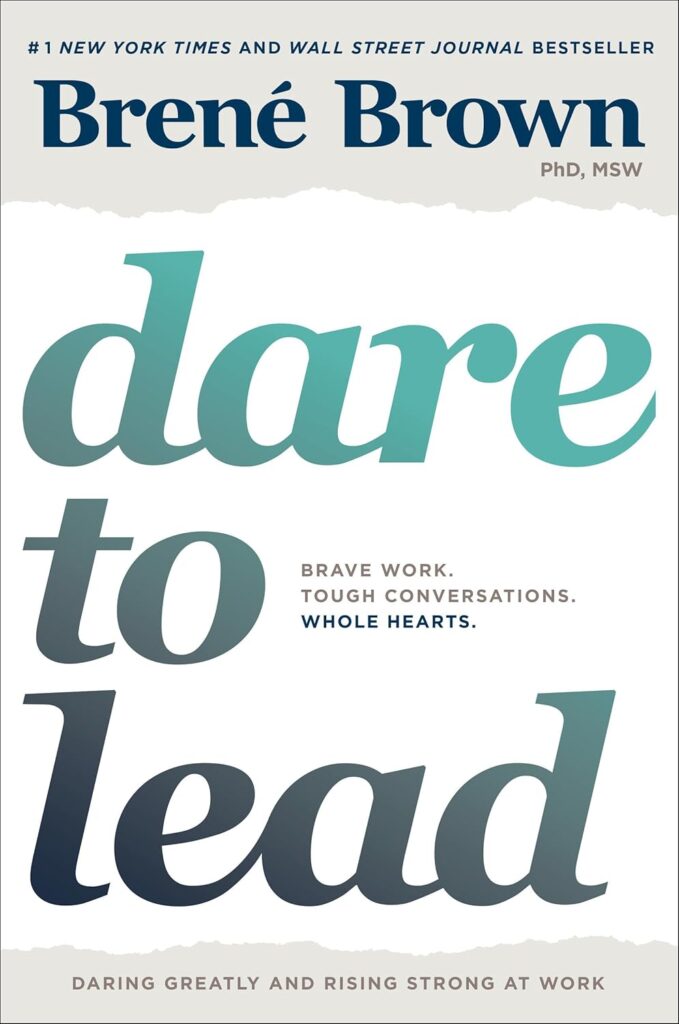
Brown writes, “One of the most important findings of my career is that daring leadership is a collection of four skill sets that are 100 percent teachable, observable, and measurable. It’s learning and unlearning that requires brave work, tough conversations, and showing up with your whole heart. Easy? No. Because choosing courage over comfort is not always our default. Worth it? Always. We want to be brave with our lives and our work. It’s why we’re here.”
A Small Practice from Its Pages:
Practice “Clear is Kind. Unclear is Unkind.” The next time a friend does something that bothers you, instead of gossiping or building resentment, kindly and clearly state your need. For example: “I value our time together. I feel hurt when we make plans and you cancel last minute. Can we talk about what’s going on?” This frames the conversation as a bid for connection, not an attack.
5. The Art of Gathering: How We Meet and Why It Matters by Priya Parker
The final book addresses the how. You can have all the right intentions, but if you don’t know how to bring people together in a meaningful way, connections remain shallow. Priya Parker, a master facilitator, reframes gathering as a transformative art form that can turn a mundane meet-up into a cornerstone of friendship.
Why It’s a Game-Changer:
This book liberates you from the boring, formulaic gatherings (think: awkward networking events or obligatory dinners). Parker argues that every gathering needs a bold, specific purpose and provides the framework to achieve it. Want to deepen existing friendships? Host a “Storytelling Dinner.” Want to make new ones? Create a “First Impressions” book club. She teaches you to be the architect of the connections you crave.
What Makes It Unique:
Parker’s advice is deliciously counterintuitive: Don’t be a chill host; be a generous, purposeful one. Create temporary rules. Gently exclude topics (like work talk) to make space for deeper ones. Protect your guests from the non-essential. This book empowers you to take charge of your social life and create containers where authentic friendship can flourish.
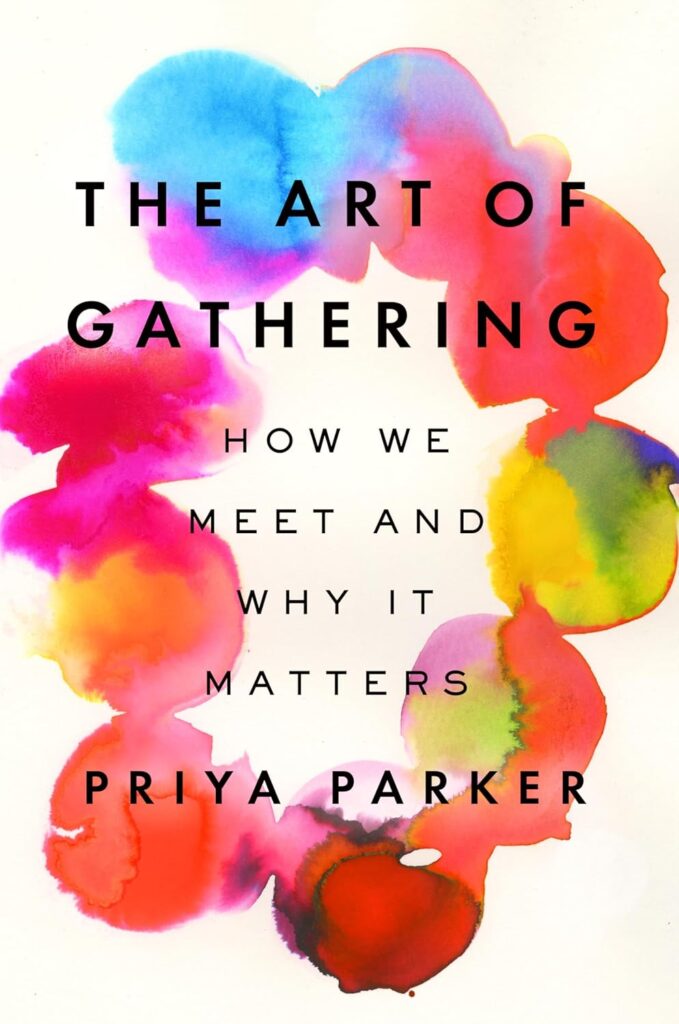
In The Art of Gathering, Priya Parker argues that the gatherings in our lives are lackluster and unproductive—which they don’t have to be. We rely too much on routine and the conventions of gatherings when we should focus on distinctiveness and the people involved. At a time when coming together is more important than ever, Parker sets forth a human-centered approach to gathering that will help everyone create meaningful, memorable experiences, large and small, for work and for play.
A Small Practice from Its Pages:
Define a Pop-Up Purpose. Before your next social event, even a simple coffee with two friends, define a purpose beyond “catching up.” It could be “To share one thing we’re secretly excited about” or “To give each other advice on one current challenge.” Email the purpose beforehand. This tiny shift transforms casual chat into meaningful connection.
Your Circle Awaits
Building meaningful friendships is a courageous act of co-creation. It requires showing up, not just swiping up. It asks for vulnerability over coolness, consistency over grand gestures.
Start with the book that resonates most. Let it be your conversation starter, your guide, and your reassurance that you are not alone in your longing. Your people are out there, perhaps reading a similar book, hoping for a friend just like you.
Take one small step today. Send that text. Extend that invitation. Share that tiny, risky piece of your truth. Your village is waiting to be built.