Bestie, have you ever found yourself on the brink of something amazing, like a promotion at work, a budding relationship, or finally hitting that fitness goal and only to somehow mess it all up? Maybe you procrastinate until the deadline whooshes by, or you pick fights over nothing, or you indulge in that extra slice of cake right when you’re seeing results. If this sounds familiar, you’re not alone. That’s self-sabotage in action, and it’s sneaky as heck. It’s like your brain’s built-in roadblock, keeping you from the success and happiness you deserve.
I’m talking from experience here. I’ve been that person who avoids opportunities because “what if I fail?” or “who am I to succeed?” But here’s the good news: journaling can be your secret weapon to uncover why you do this and how to stop. It’s like having a heart-to-heart with your inner self, no judgment, just pure insight. In this post, I’m sharing 200 journal prompts designed to help you dig deep into the roots of your self-sabotage.
We’ll break them down into categories so it’s not overwhelming, and I’ll sprinkle in some tips along the way. By the end, you’ll have tools to rewrite your story. Let’s dive in and turn those “why me?” moments into “aha!” breakthroughs. Fid more journal prompts, reflection questions and affirmations here.
Table of Contents
What Is Self-Sabotage and Why Does It Happen?
Before we jump into the prompts, let’s chat about what self-sabotage really is. It’s those behaviors or thoughts that hold you back from achieving your goals, even when you consciously want them. Think perfectionism leading to paralysis, or fear of success making you bail on big chances. Psychologists say it often stems from deep-seated beliefs formed in childhood, past traumas, or low self-worth. Maybe you learned that success brings envy or loss, so your subconscious protects you by keeping things “safe” but stagnant.
Journaling helps because it forces you to confront these patterns without the pressure of talking to someone else. It’s private, therapeutic, and empowering. Studies show that reflective writing reduces stress and boosts self-awareness making it perfect for tackling self-sabotage. Grab a cozy notebook, your favorite pen, and some tea. Set aside 10-15 minutes a day, and be honest. No right or wrong answers; it’s all about discovery.
200 Questions to Help Identify Reasons why You Self- Sabotage
Category 1: Exploring Childhood Roots
Our early years shape so much of who we are. Self-sabotage often traces back to how we were raised, what we observed, or unmet needs. These prompts will help you unpack those memories and see how they play out today. Start here if you suspect family dynamics are at play, it’s eye-opening!
- What messages did I receive about success as a child? Did my parents celebrate achievements or downplay them?
- Describe a time when I felt criticized for trying something new. How does that fear show up now?
- Who was my role model growing up, and did they self-sabotage in ways I might be copying?
- What unmet emotional needs from childhood might be causing me to undermine myself today?
- Recall a punishment or reward system in my family. How does it influence my motivation?
- Did I ever feel like I had to be perfect to be loved? How does that perfectionism sabotage me?
- What fears did my caregivers instill in me about failure or risk-taking?
- Describe a childhood dream I abandoned. Why did I let it go, and do I still do that?
- How did sibling rivalry or comparisons affect my self-confidence?
- What limiting beliefs about money or success were common in my household?
- Recall a time I was praised for playing small. Does that comfort zone still hold me back?
- How did my family’s handling of emotions teach me to avoid vulnerability?
- What early rejections shaped my fear of putting myself out there?
- Describe how parental expectations created inner conflict for me.
- Did I learn that happiness is fleeting, leading me to sabotage good things?
- What childhood traumas might be triggering my self-destructive patterns?
- How did school experiences reinforce self-doubt or imposter syndrome?
- Recall a time I self-sabotaged as a kid to fit in. Do I still seek belonging over growth?
- What stories from my past make me believe I’m not worthy of success?
- How can I reparent myself to heal these childhood wounds?
Whew, heavy stuff, right? But remember, acknowledging it is the first step to freedom. If these stir up emotions, that’s normal, take breaks and be kind to yourself.
Category 2: Unpacking Fear and Anxiety
Fear is a big driver of self-sabotage. It’s that voice saying, “Don’t get too big; you’ll fall harder.” These prompts target those anxieties, helping you name them and tame them.
- What am I most afraid will happen if I succeed?
- How does my fear of failure manifest in daily habits?
- Describe a time anxiety led me to procrastinate on something important.
- What worst-case scenarios do I replay that stop me from trying?
- How does fear of judgment from others cause me to self-sabotage?
- What physical sensations arise when I’m on the verge of a breakthrough?
- How has past anxiety shaped my avoidance behaviors?
- What if my fears are just stories? Rewrite one as empowering.
- Describe how fear of change keeps me in toxic situations.
- What role does imposter syndrome play in my self-sabotage?
- How do I use busyness to avoid facing my fears?
- What small risks have I avoided lately, and why?
- How does anxiety about the unknown lead to self-undermining?
- Recall a time fear made me quit too soon. What could I do differently?
- What fears about relationships cause me to push people away?
- How does my inner critic amplify anxiety and sabotage?
- What if success feels scary because it’s unfamiliar?
- Describe how fear of loss (e.g., friends, identity) holds me back.
- How can I build resilience against these fears?
- What affirmations can counter my anxiety-driven sabotage?
See? Fears lose power when you shine a light on them. Try pairing these with deep breaths or a walk, journaling plus movement is magic.
Category 3: Relationships and Self-Sabotage
We often sabotage in love and friendships because of attachment styles or past hurts. These prompts explore how interpersonal dynamics fuel your patterns.
- How do I sabotage relationships when things get too good?
- What past heartbreaks make me fear intimacy?
- Describe patterns in my friendships where I pull away first.
- How does low self-esteem lead me to choose unavailable partners?
- What beliefs about love cause me to create drama?
- Recall a time I tested a partner’s loyalty through sabotage.
- How do I use jealousy or comparison to undermine connections?
- What family patterns in relationships am I repeating?
- Describe how fear of abandonment leads to clingy or distant behavior.
- How does self-sabotage show up in my communication styles?
- What unmet needs in relationships trigger destructive actions?
- How do I avoid vulnerability to “protect” myself?
- Recall a healthy relationship I sabotaged—why?
- What role does codependency play in my patterns?
- How does past betrayal make me preemptively end things?
- Describe how I use work or hobbies to avoid emotional closeness.
- What if I’m worthy of healthy love? How does that feel?
- How can I spot sabotage early in new relationships?
- What boundaries could prevent relational self-harm?
- How has therapy or self-reflection helped in this area before?
Relationships are mirrors, use these to see yourself clearly and build stronger bonds.
Category 4: Career and Ambition Blocks
Work is a hotbed for self-sabotage, from missing deadlines to downplaying achievements. Let’s uncover why you dim your professional light.
- What fears about career success cause me to hold back?
- Describe a time I procrastinated on a big project and why?
- How does imposter syndrome show up at work?
- What limiting beliefs about money sabotage my earning potential?
- Recall avoiding a promotion or opportunity, what stopped me?
- How do I use perfectionism to delay submissions?
- What past job failures fuel my hesitation now?
- Describe how comparison to colleagues leads to self-doubt.
- How does fear of leadership roles cause sabotage?
- What work habits stem from childhood achievement pressures?
- How do I undermine networking or self-promotion?
- Recall a win I downplayed and why couldn’t I celebrate?
- What if failure is just feedback? How does that shift things?
- How does burnout from overworking mask deeper sabotage?
- Describe patterns in job-hopping or staying too long in bad roles.
- What role does work-life imbalance play in my patterns?
- How can I reframe ambition as self-care?
- What mentors or role models could inspire change?
- How does fear of visibility (e.g., public speaking) hold me back?
- What small steps can break my career sabotage cycle?
Your career deserves your full shine, these prompts are your roadmap.
Category 5: Health and Wellness Sabotage
From ditching diets to skipping workouts, self-sabotage hits our bodies hard. Explore why you resist feeling your best.
- What emotions trigger emotional eating or bingeing?
- Describe a time I quit a fitness routine and what was the real reason?
- How does body image shame lead to self-neglect?
- What beliefs about health make me avoid doctors or check-ups?
- Recall sabotaging sleep with late-night scrolling, why?
- How do stress and anxiety manifest in unhealthy habits?
- What past diets failed due to self-sabotage patterns?
- Describe how perfectionism derails my wellness goals.
- How does fear of change keep me in comfort eating?
- What role does self-worth play in prioritizing health?
- How do I use excuses to avoid exercise?
- Recall a health win I reversed and what fear crept in?
- What if my body deserves kindness? How to embody that?
- How does social pressure influence my health choices?
- Describe patterns in substance use as escape.
- What unmet needs drive my unhealthy coping?
- How can journaling track and prevent health sabotage?
- What affirmations support consistent self-care?
- How does trauma affect my relationship with my body?
- What small habits can build momentum against sabotage?
Your health is wealth, treat it like the priority it is.
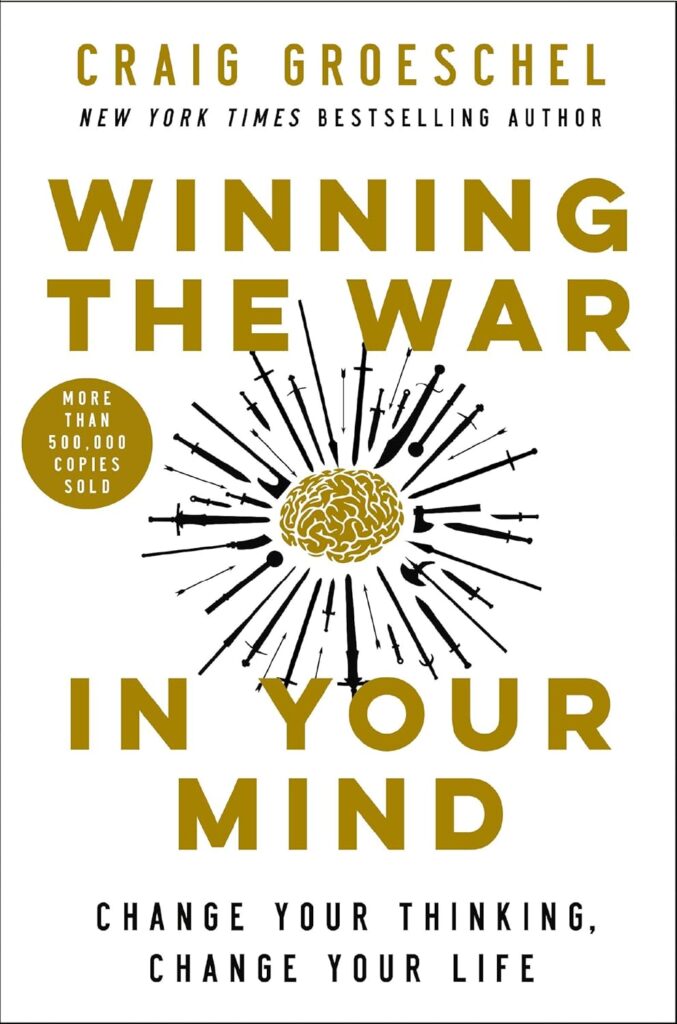
Are your thoughts out of control–just like your life? Do you long to break free from the spiral of destructive thinking? Let God’s truth become your battle plan to win the war in your mind!
We’ve all tried to think our way out of bad habits and unhealthy thought patterns, only to find ourselves stuck with an out-of-control mind and off-track daily life. Pastor and New York Times bestselling author Craig Groeschel understands deeply this daily battle against self-doubt and negative thinking, and in this powerful new book he reveals the strategies he’s discovered to change your mind and your life for the long-term.
Category 6: Emotional and Mental Patterns
Dive into the mind games we play with ourselves. These target negative thinking and emotional loops.
- What negative self-talk fuels my sabotage?
- Describe how rumination keeps me stuck.
- How does depression or low mood lead to withdrawal?
- What emotional triggers cause impulsive decisions?
- Recall using anger to mask vulnerability.
- How do I avoid joy because it feels unsafe?
- What role does guilt play in punishing myself?
- Describe patterns of overthinking that paralyze action.
- How does shame from past mistakes sabotage present?
- What if emotions are guides, not enemies?
- How do I use distractions to numb feelings?
- Recall a time sadness led to isolation.
- What beliefs about emotions were taught to me?
- How can mindfulness interrupt emotional sabotage?
- Describe how envy turns inward as self-harm.
- What role does resilience (or lack) play?
- How do I sabotage happiness with “what ifs”?
- What affirmations counter emotional blocks?
- How does therapy complement this journaling?
- What small wins build emotional strength?
Emotions are your allies, befriend them.
Category 7: Habits and Daily Routines
Self-sabotage thrives in routines. Break it down here.
- What daily habits undermine my productivity?
- Describe procrastination patterns and their roots.
- How does disorganization reflect inner chaos?
- What fears make me resist structure?
- Recall sabotaging mornings with snoozing, why?
- How do I use social media to avoid tasks?
- What role does fatigue play in poor choices?
- Describe how multitasking leads to burnout.
- How can routines foster self-love over sabotage?
- What small changes disrupt negative habits?
- How does perfectionism affect daily goals?
- Recall a productive day sabotaged by doubt.
- What beliefs about time cause rushing or delaying?
- How do I undermine rest with guilt?
- Describe patterns in financial sabotage (e.g., impulse buys).
- What if habits are choices? Rewrite one.
- How does environment influence my routines?
- What accountability helps break cycles?
- How can tracking reveal hidden sabotage?
- What affirmations support habit change?
Habits shape destiny, tweak them wisely.
Category 8: Self-Worth and Identity
At the core, self-sabotage often screams “I’m not enough.” Heal that here.
- What core beliefs about my worth cause sabotage?
- Describe how low self-esteem shows in decisions.
- How does identity as “the underdog” hold me back?
- What past events eroded my confidence?
- Recall affirming my worth and how did it feel?
- How do I compare myself to sabotage growth?
- What if I’m inherently valuable? Explore that.
- Describe patterns of people-pleasing as sabotage.
- How does fear of outshining others play in?
- What role does authenticity (or lack) have?
- How can self-compassion replace self-criticism?
- Recall a time I owned my power and why is it rare?
- What affirmations build self-worth?
- How does trauma affect my self-view?
- Describe sabotaging compliments or praise.
- What if success aligns with my true self?
- How do hobbies reveal untapped potential?
- What boundaries protect my worth?
- How can gratitude shift identity sabotage?
- What vision of worthy me looks like?
You are enough, own it.
Category 9: Future Vision and Goals
Self-sabotage fears the future. Dream big with these.
- What goals have I sabotaged out of fear?
- Describe a vivid future without sabotage.
- How does doubt cloud my long-term vision?
- What steps toward goals feel scary?
- Recall abandoning dreams and revive one.
- How can visualization counter sabotage?
- What beliefs about deserving, block aspirations?
- Describe how short-term gratification sabotages long-term.
- What if failure is part of success?
- How do I undermine planning with overwhelm?
- What role models inspire fearless pursuit?
- How can accountability partners help?
- Describe patterns in goal-setting failures.
- What affirmations fuel future focus?
- How does past success inform future wins?
- What small goals build momentum?
- How fear of maintenance sabotages achievement?
- What if my dreams are meant to be?
- How can journaling track progress?
- What legacy do I want, free of sabotage?
The future is yours, claim it.
Category 10: Integration and Healing
Tie it all together for lasting change.
- What patterns connect across these categories?
- Describe a recent sabotage and its root cause?
- How can forgiveness heal past wounds?
- What therapy or resources complement journaling?
- Recall a breakthrough from reflection.
- How does gratitude interrupt sabotage?
- What self-care rituals support healing?
- Describe integrating insights into daily life.
- What if sabotage is a teacher?
- How can community reduce isolation?
- What affirmations summarize my growth?
- Describe a sabotage-free day.
- How does mindfulness aid awareness?
- What books or tools have helped before?
- How can I celebrate small victories?
- What boundaries prevent future sabotage?
- Describe my empowered self.
- How does love replace fear?
- What final insights from these prompts?
- How will I commit to ongoing discovery?
Amazing job making it through! These 200 prompts are your toolkit for transformation.
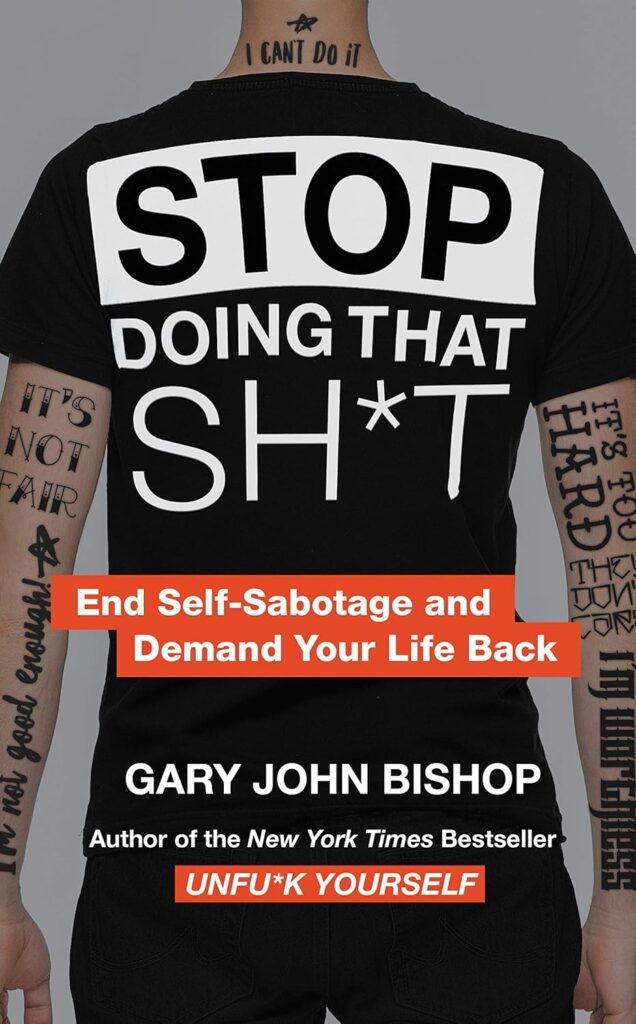
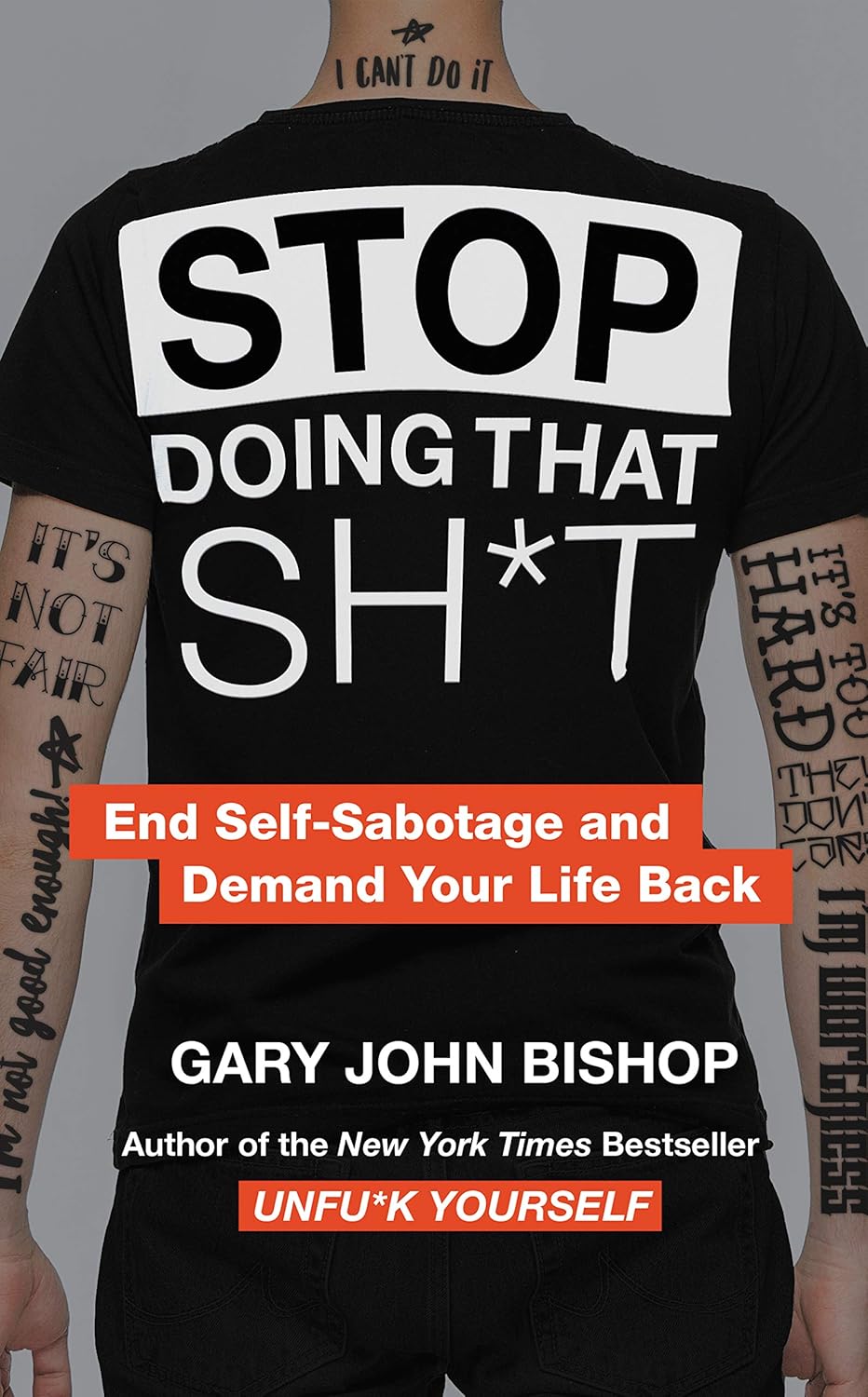
New York Times and international bestseller Gary John Bishop presents a breakthrough—no BS—guide to ending toxic behavioral patterns, stopping negative self-talk, ditching anxious attachment styles, and finally, once-and-for-all, getting out of our own fu*king way
Are you constantly stuck in destructive cycles that hold you back from living the life you really want? Has your healing journey led you back to the same harmful habits? Does it seem like the voices in your head never shut the fu*k up? If so, you are not alone. Gary John Bishop has helped millions get their lives back on track with a healthy mindset and renewed sense of self.
Amazon Recommendations to Support Your Journaling Journey
To make this even easier, here are some Amazon picks I love. (As an affiliate, I may earn from qualifying purchases, but I’d recommend these anyway!)
- The Artist’s Way by Julia Cameron: A classic for creative recovery and self-discovery. Perfect companion to these prompts. Grab it here.
- Burn After Writing Journal: Fun, prompt-filled journal for deep dives without overwhelm. Get it here
- The Gifts of Imperfection by Brené Brown: Tackles shame and self-worth head-on. Life-changing read. Buy now
- Journaling Notebook: Affordable, high-quality journals for endless writing. Shop now
These will supercharge your practice, grab one and start today!
Wrapping It Up: Your Path to Freedom Starts Now
Bestie, self-sabotage doesn’t have to define you. With these prompts, you’re equipped to uncover, understand, and overcome. Be patient, consistent, and celebrate every insight. You’ve got this, step into your power.