
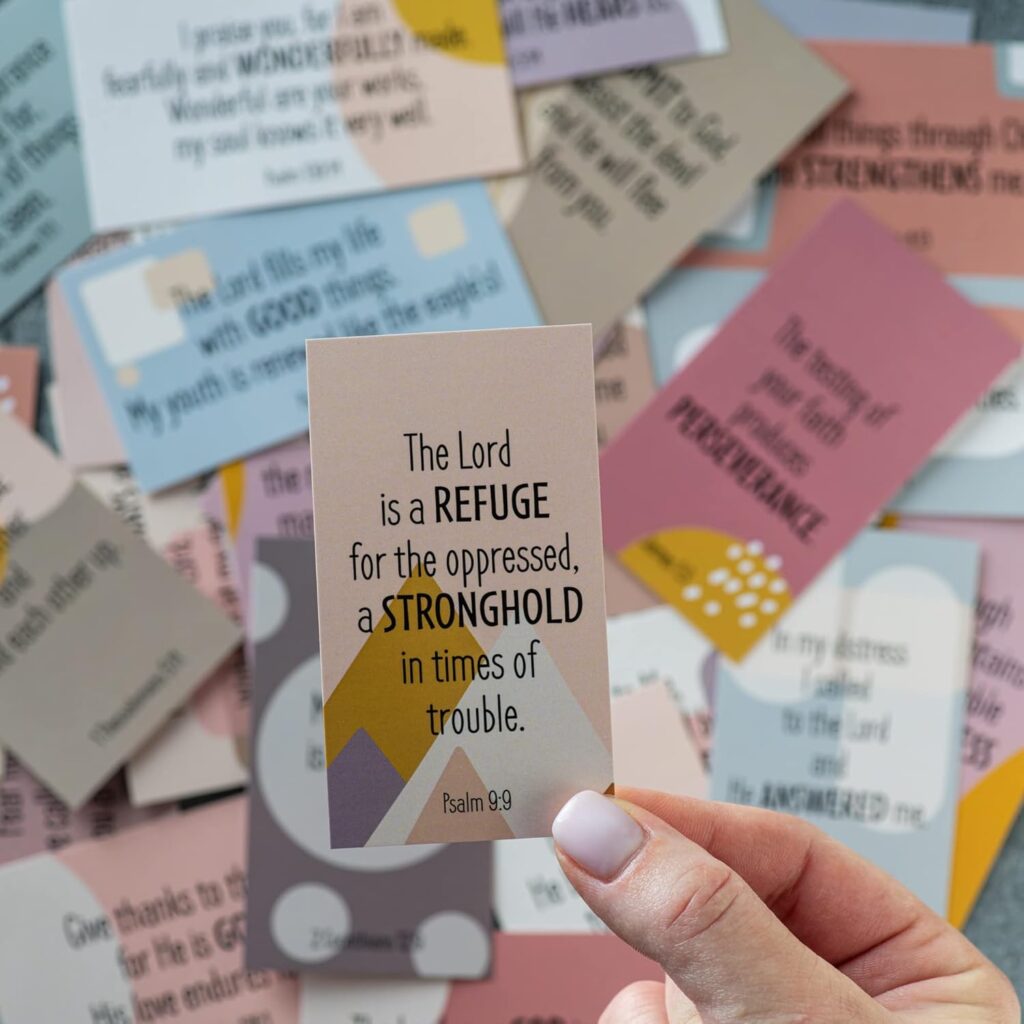
There is a version of you that still lives somewhere deep inside, waiting. She is the little girl who wanted to be held longer, told she was enough, allowed to play without conditions. She is the one who learned too early that love had to be earned, that feelings were inconvenient, that growing up fast was survival. And whether you have said it out loud or not, part of the reason you are drawn to soft living, to gentleness and femininity and slowness and God, is because somewhere in your spirit, you know that little girl deserves better.
Healing your inner child is not a trend. It is not a Pinterest aesthetic or a journaling prompt you try once and forget. It is one of the most sacred, most tender, most necessary things a woman can do for herself. And when you weave it together with faith and soft living, something extraordinary begins to happen. You stop performing. You start becoming. You return to the truest, most feminine, most God-given version of who you are.
This post is for you if you feel like you have been strong for too long. If soft living sounds beautiful but somehow feels too far away, too good for a girl like you. If you love God but still carry wounds you have never fully handed over to Him. If you want the flowy dresses and the slow mornings and the peace that passes understanding, but something underneath keeps pulling you back into hardness, into survival mode, into that exhausted version of yourself that you are so desperate to outgrow.
You are in the right place. Let us begin. But before that, let’s catch up on more and previous posts on Christian soft girl living.
Table of Contents
Why Your Inner Child Needs You Now More Than Ever
Before soft living can be a lifestyle, it has to be a healing. So many women come to this space seeking the aesthetic, the candles and the linen and the quiet mornings, only to find that something inside keeps resisting it. Peace feels unfamiliar. Rest feels guilty. Receiving feels impossible. Being gentle with yourself feels like a luxury you have not earned.
That resistance has a name. It is your inner child, and she is still operating from old rules.
Your inner child is not a metaphor. She is the emotional blueprint that was formed in your earliest years, the part of you that decided, based on what happened to her, what love meant, what safety looked like, what being a girl or a woman required. If she grew up in chaos, she might believe calm is the moment before something bad happens. If she grew up in emotional neglect, she might believe her feelings are too much or not enough. If she was parentified or overburdened, she might believe rest is laziness and softness is weakness.
These beliefs do not disappear when you become an adult. They go underground. They come out as anxiety, perfectionism, difficulty receiving love, the constant need to do more, be more, prove more. They come out as the inability to slow down even when your body is screaming for rest. They come out as a complicated relationship with God because somewhere deep inside you, love never came without conditions.
Inner child healing is the process of going back in your heart to that little girl, acknowledging what she went through, and telling her the truth she never got to hear. It is not wallowing. It is not making excuses. It is not blaming your parents forever. It is giving yourself the profound gift of emotional honesty so that you can finally stop carrying what was never yours to carry in the first place.
The Connection Between Faith and Inner Child Healing
Here is something that might surprise you: the Gospel is, at its core, an inner child healing story.
God does not call you to come to Him as a polished, healed, composed woman who has figured everything out. He says come as a child. He says unless you become like a little child, you cannot enter the kingdom. He says He is close to the brokenhearted. He says He collects every tear. He says He knew you in your mother’s womb, which means He knew you before the wounds, before the coping mechanisms, before the armor.
The version of you God is most drawn to is not the strong one. It is the tender one. The one who needs Him. The one who has stopped pretending.
So many women of faith struggle with inner child healing because they have been taught, directly or indirectly, that emotional work is navel-gazing. That prayer alone should fix it. That if you just have enough faith, the pain will disappear. And while prayer is absolutely foundational, healing is also a process that God walks with you through, not a moment where He simply erases your history and you move on. He is the God who heals, yes, but healing is often a journey, not an event.
What changes when you bring faith into inner child healing is the foundation. You are not healing toward nothing. You are not trying to become your own mother, your own savior, your own source. You are healing back toward your Father, toward the original love you were designed to live inside of. Every layer of pain you release is a layer between you and His presence that dissolves. Every lie you reject is replaced with a truth from scripture. Every wound you surrender becomes an altar.
This is why healing your inner child and living a soft, God-centered life are not separate journeys. They are the same journey. Softness is not possible without healing, and true healing always leads you back to a gentler way of living.

Lazy Chair with Folding Ottoman,Leisure Sofa Chair,Soft Fabric Armchair with Armrests and Side Pockets, Reading Chair with Footrest for Living Room, Bedroom, Office (Plush Dark Brown)
Ergonomic Compliance:Designed the backrest curvature that best fits the comfortable angle of the human body for the accent lazy chair , allowing you to feel absolute comfort when leaning against the seat. Comfortable headrests support your head, smooth and flat back lines provide ample support for your waist and back, armrests on both sides provide support for your arms, and side pockets make it easier to store magazines
Signs Your Inner Child Is Calling for Attention
You might be wondering whether inner child healing is actually what you need, or whether you are just going through a rough season. Here are some signs that your inner child is showing up in your adult life and asking to be seen:
You find soft living beautiful but deeply uncomfortable. You can pin all the aesthetics but the moment you try to actually rest or receive, guilt or anxiety rushes in.
You have difficulty receiving, whether that is compliments, gifts, help, or love. There is a part of you that feels suspicious of goodness, like it will be taken away.
You default to productivity when you are emotionally overwhelmed. Doing feels safer than feeling.
You have a pattern of seeking validation before you can feel at peace. Other people’s approval feels like oxygen.
You struggle to connect with God on an intimate level because deep down, He feels unpredictable or conditional, the way a parent might have felt.
You are deeply compassionate toward others but have almost no compassion for yourself. Your inner voice is harsh, critical, unrelenting.
You have a hard time identifying what you actually want or enjoy because for so long, your wants were irrelevant or unsafe.
You feel most comfortable when you are needed, when you are helping, when you are busy. Being still feels like being nothing.
Any of these sound familiar? That is not weakness. That is your inner child, waving her hand, telling you she needs your attention, your kindness, and your God.
A Faith-Based Framework for Healing Your Inner Child Through Soft Living
This is where it gets practical. Inner child healing is not just a therapy concept, though therapy is a beautiful and powerful tool and I absolutely encourage it. It is also a daily, devotional, deeply feminine practice that you can weave into your soft living rhythms. Here is how.
Step One: Create Safety With God Before Anything Else
The first thing your inner child needs is safety. And the most stable, most reliable source of that safety is not a human being. It is God.
Before you journal, before you pray through specific memories, before you do any of the exercises below, spend time simply building an atmosphere of safety in your relationship with God. This looks like choosing scriptures that speak of His tenderness and consistency. Zephaniah 3:17 says He rejoices over you with singing. Isaiah 66:13 says He will comfort you as a mother comforts her child. Psalm 27:10 says even if your mother and father forsake you, He will take you up.
Read these scriptures slowly. Sit with them. Let them be medicine.
Create a physical space for this. A soft corner in your room, a chair by a window, a spot at your altar or nightstand. Soft lighting, maybe a candle. Something that tells your nervous system that this time is sacred, gentle, and safe. This physical environment matters because your inner child is not just in your mind. She lives in your body, in your nervous system, and she responds to sensory signals.
Make meeting with God a daily, non-negotiable softness. Not a performance, not a checklist, but a returning.
Amazon recommendation: A high-quality guided prayer journal designed for women, one that pairs scripture with reflective prompts, can make this devotional time more tangible and grounding. Look for one that specifically includes emotional healing prompts alongside the faith content. One well-loved option to search for is “She Reads Truth Bible Journal” or the “Beautiful Word Coloring Bible” for women who process through creativity and color.
Step Two: Meet Her in Gentleness, Not Judgment
Here is where most women get stuck. When they first encounter their inner child, the instinct is to rush her, fix her, or feel embarrassed by her needs. She is messy and unresolved and she wants things that feel childish. Love, play, safety, validation, warmth.
Your job is not to fix her. Your job is to be the loving, present, God-guided mother she may never have had.
This looks like journaling from your inner child. Set a timer for ten minutes, let yourself write in the voice of the little girl you were, without editing, without judgment. What does she feel? What did she need? What is she still carrying?
Then, respond to her. Not from your current wounded self, but from your highest self, your God-informed self, the woman you are becoming. Tell her what she needed to hear. Tell her she is safe. Tell her she is not too much. Tell her God loves her exactly as she is. Tell her she does not have to earn anything.
This practice sounds simple. It is not simple. The first time you do it, you may cry for an hour, and that is not falling apart. That is falling open.
Amazon recommendation: “The Inner Child Workbook” by Cathryn Taylor is a deeply therapeutic resource that walks you through this process step by step. It is not explicitly faith-based but it pairs beautifully with your own spiritual practice when you bring God into each exercise intentionally.

Women’s Faith Oversize Baggy Long Sleeve T Shirt Causal Loose Midi Dresses with Pockets
Step Three: Reparent Yourself Through Your Daily Soft Living Rituals
Reparenting is the ongoing act of giving yourself what you needed as a child, not from a place of self-indulgence, but from a place of compassionate intention. And soft living, when practiced with awareness, is one of the most powerful forms of reparenting available to you.
When you make yourself a slow, nourishing breakfast instead of skipping it, you are telling your inner child that she deserves to be fed and cared for.
When you put yourself to bed at a reasonable hour, with clean sheets and a calming routine, you are giving her the bedtime ritual she may never have had.
When you dress beautifully, not to impress anyone but because loveliness honors the body God gave you, you are telling her she is worth adorning.
When you speak to yourself with patience, when you do not spiral into shame over a mistake but instead say gently, “It is okay, we are learning,” you are mothering her in real time.
The key distinction here is intentionality. Soft living for healing is not just aesthetics. It is the conscious decision that this little girl inside you is going to be taken care of now, even if no one took care of her then. You are the adult. You have the power. And God has given you the grace.
Amazon recommendation: A quality skincare set for a gentle, consistent self-care ritual can become a tangible form of reparenting. The act of caring for your skin slowly, intentionally, without rushing, is a deeply regulating and loving practice. The “COSRX Snail Mucin” set or a gentle rose-based skincare line are popular for the soft girl beauty routine and won’t overwhelm a sensitive skin barrier. Choose something that feels luxurious enough to feel like an act of love.
Step Four: Heal the Father Wound Through Intimacy With God
This deserves its own section because it is so critical and so rarely spoken about directly.
Many women who struggle with softness carry what is called a father wound. This is the emotional and spiritual injury that comes from a father who was absent, harsh, emotionally unavailable, inconsistent, overbearing, or abusive. The father wound does not only affect how you relate to men. It affects how you relate to God, because our first understanding of what a father is, what it means to be loved by an authority figure, to be protected and provided for and seen by someone powerful, comes from our earthly fathers.
If your father failed you, and so many of our fathers did, in ways big and small, then approaching God as Father may feel either impossible or terrifyingly vulnerable. You may keep Him at an arm’s length. You may approach Him only with requests and never with your heart. You may be terrified that He will abandon you the moment you disappoint Him.
Healing this wound is central to everything. Because the softness you are reaching for is not really about aesthetics. It is about the felt experience of being a beloved daughter. Of being held. Of not having to strive or perform or earn. Of knowing someone powerful has you completely covered.
Pray specifically about your father wound. Be honest with God about what your father failed to do, not to slander your parent, but to be truthful before the Father who already knows. Ask God to show you Himself as He truly is, not through the lens of human disappointment. Ask Him to heal the part of you that expects Him to leave.
Read “Good Good Father” by Chris Tomlin and Pat Barett as a worship companion or listen to it in your soft morning routine and let yourself feel what it would mean for it to be true.
Amazon recommendation: “The Father Effect” book or “Fatherless Daughters” by Pamela Thomas can be a profound companion resource for this part of the journey. These books help you name and contextualize the wound so that your prayers and healing work have something specific to work with.
Step Five: Build a Soft, Sacred Daily Rhythm That Holds Her
Your inner child heals in routine. She heals in predictability. She heals when she wakes up and knows that this day has goodness built into it, not because everything will be perfect but because she has a structure that holds her.
This is the practical, embodied reason why morning routines and evening routines are so central to soft living. They are not vanity. They are containers of safety.
Design a morning that begins with God, not with your phone. Even ten to fifteen minutes of silence, scripture, and prayer before the world demands anything of you sends a powerful message to your nervous system: you are safe, you are held, the day has been given to you.
Design an evening that ends with gentleness. A slow skincare routine. A cup of herbal tea. Gratitude for three things. A prayer of surrender. Clean, soft sheets. No harsh lighting. No doom-scrolling that reactivates your nervous system right before sleep.
Related post: How to Create a Soft Girl Morning Routine With God: Start Every Day in His Presence.
In the middle of your day, build in one small act of beauty or nourishment. A walk. A flower in a vase. A phone call with someone who loves you. A song that makes you feel like yourself. These are not extras. For a healing inner child, they are essential.
Amazon recommendation: A beautiful herbal tea set, something like an assortment from Harney and Sons or a calming blend with lavender, chamomile, and rose, can become the anchor of your evening ritual. The act of making tea slowly, warming your hands around the cup, and being still is profoundly regulating.
What to Do When Healing Feels Like Too Much
There will be days when inner child healing does not feel soft at all. It will feel like grief, like anger, like exhaustion, like confusion. There will be days when you sit in your beautiful soft space and you cry in a way that feels ugly and old and inconvenient.
This is not regression. This is the work.
Grief is not the opposite of healing. It is the evidence of it. You cannot release what you have not acknowledged, and acknowledgment often has tears attached to it.
On these days, do not push yourself toward productivity. Do not tell yourself to be stronger or get over it faster. Instead, lower the bar dramatically. Can you eat something nourishing? Can you get outside for a few minutes? Can you call someone safe? Can you whisper a prayer that is as simple as, God, I need You right now?
Give your inner child the one thing she most needed and likely never received: permission to fall apart without it meaning anything catastrophic. She is allowed to be sad. You are allowed to be sad. Feeling it all the way through is how it moves.
And then, when the wave passes, which it always does, return to your rhythm. Return to the scripture. Return to the soft morning. Return to the gentle voice that says, You are healing, and that is enough.
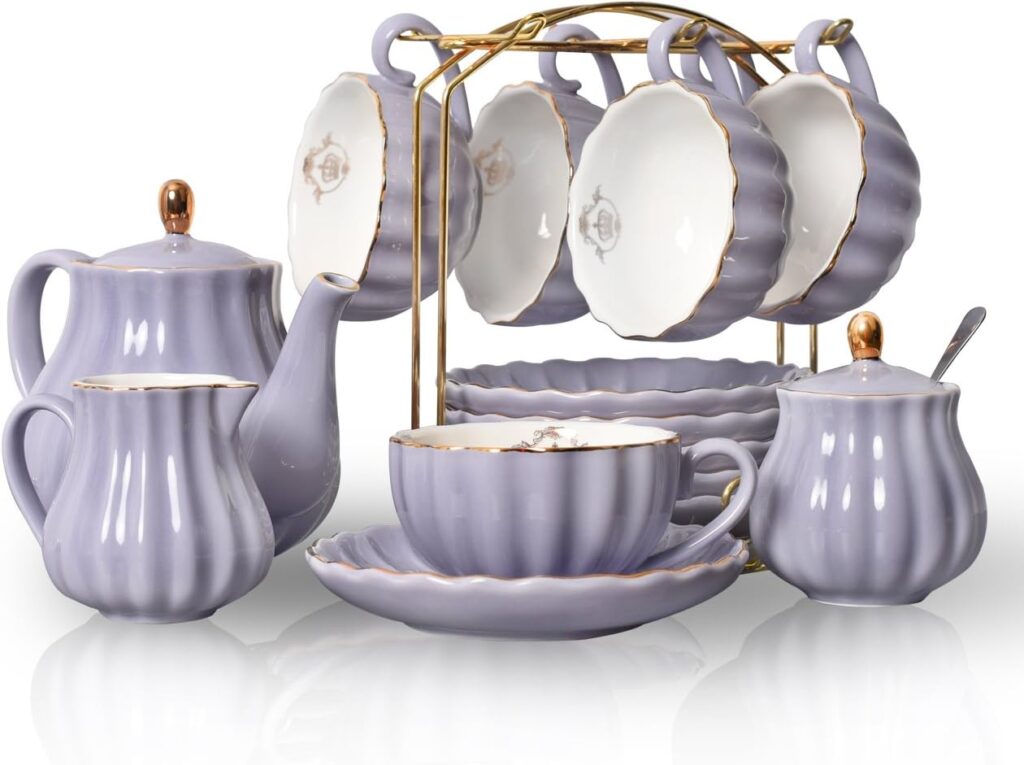
Porcelain Tea Sets British Royal Series, 8 OZ Cups& Saucer Service for 6, with Teapot Sugar Bowl Cream Pitcher Teaspoons and tea strainer for Tea/Coffee, Pukka Home(purple)
A Word on Community, Therapy, and Knowing When to Ask for Help
Inner child healing through faith and soft living is a powerful personal practice, but it is not designed to replace professional support. If you are carrying trauma that feels too big, too old, or too active for journaling and prayer alone, please seek a therapist, ideally one who integrates faith and is trauma-informed.
There is nothing weak or unfaithful about going to therapy. The same God who inspired the Word also knit together the human brain and gave some people the gift of helping others understand and heal it. Therapy is a God-given resource, not a replacement for faith.
Community also matters. Find your people, the girlies who are also on this path, who want to talk about God and feelings and morning routines and healing all in the same breath. Whether that is an online community, a small group at church, or one trusted friend who gets it, you were not designed to heal alone.
You Were Made for This
Somewhere in you is a little girl who wanted to be delicate and loved and safe. Who wanted to wear something beautiful and be told she was enough. Who wanted a lap to climb into and a voice to say, I have got you.
She has been waiting a long time.
But here is the truth, the one that your faith makes possible: it is not too late for her. It is not too late for you. The Father who made her has never stopped watching her, never stopped loving her, never gave up on bringing her home to softness and peace and rest. The entire story of the Gospel is a story of God coming after the people He loves, and He is coming after her right now, through this very moment of you reading these words and deciding you are finally ready.
Soft living is not about what you own or how your space looks or whether your wardrobe is perfectly feminine. At its core, it is a posture of the heart. It is the choice to stop striving and start receiving. To stop proving and start resting. To live as a beloved daughter rather than an exhausted servant.
Your inner child does not need you to be perfect. She just needs you to show up for her the way God shows up for you, faithfully, gently, again and again and again.
Start today. Start exactly where you are. Start softly.