“A beautifully styled bookshelf is like a portrait of your personality, the books you’ve read, the objects you love, and the way you see the world, all arranged with intention.”
Here’s something most people don’t realize: the difference between a chaotic, cluttered bookshelf and one that looks like it belongs in an Architectural Digest spread isn’t talent, it’s knowing the rules. And once you know them, styling a bookshelf becomes genuinely fun.
Whether you’ve got a tall IKEA Billy unit, a chunky solid wood antique, or a set of floating wall shelves, these 12 designer-approved secrets will completely transform the way your bookshelf looks and feels in your space. Let’s go shelf by shelf. Catch up on previous and more posts on home decor and improvement.
Table of Contents
12 proven designer secrets for styling a bookshelf beautifully.
Start With a Clean Slate.
Before you style anything, take everything off your bookshelf. Every book, every random item that somehow migrated there, every candle stub. All of it. Give the shelves a good wipe-down and take a breath.
This is important not just for cleanliness, but for mental clarity. When you look at a blank shelf, you can actually visualize what belongs there instead of just shuffling the same chaos around. Most people rearrange without editing, which is why they end up with the same results.
This is also the moment to be brutally honest: does everything you removed actually deserve to go back? If the answer is no, donate it, store it, or move it elsewhere. Less is almost always more on a bookshelf.
Organize Books by Color
This is the single styling trick that gets the most skepticism until people actually try it and then they’re completely converted. Arranging books by spine color creates an instant, cohesive visual story that makes even a basic IKEA shelf look curated and intentional.
You don’t have to do a strict rainbow gradient (though it’s gorgeous if you do). Instead, try grouping within a palette: all the warm earth tones together, all the blues and greens in another section, all the whites and creams along one shelf. The effect is genuinely stunning.
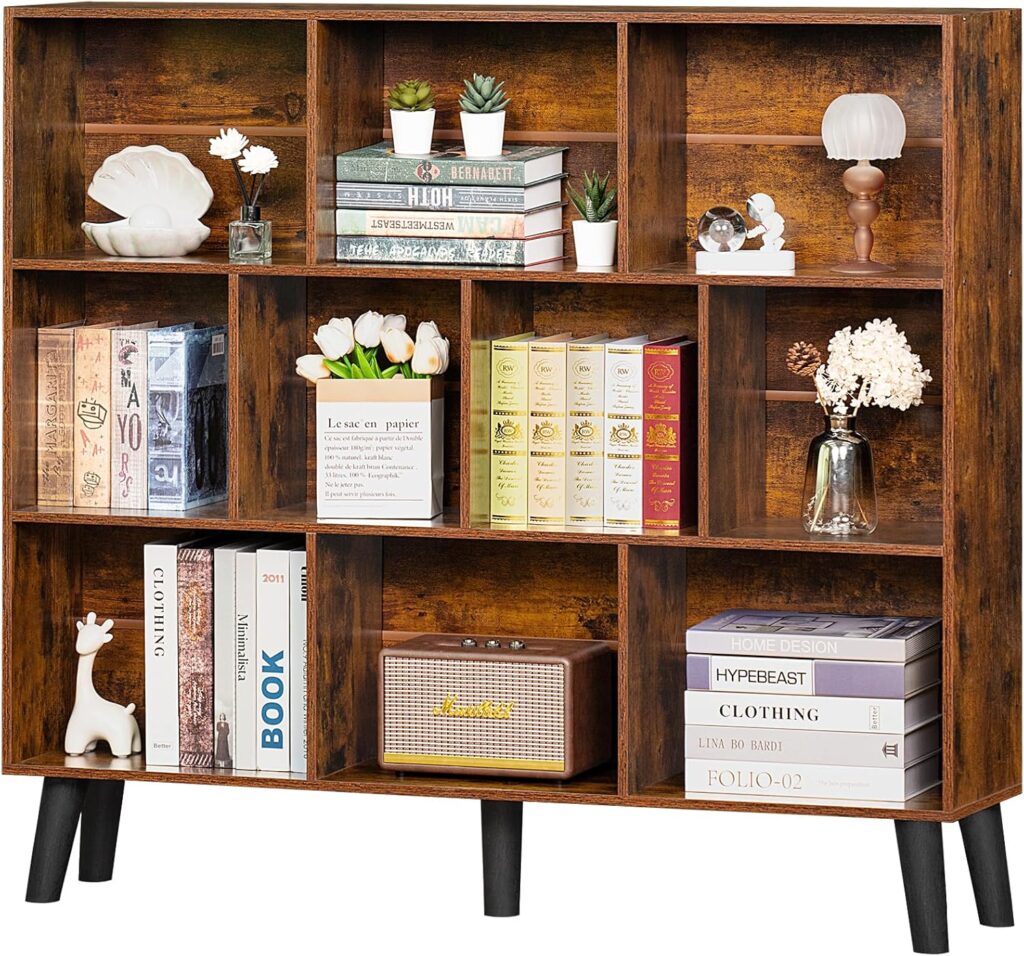
LEYAOYAO 10 Cube Bookshelf,3 Tier Modern Wide Bookcase with Legs,Mid-Century
Master the Art of Layering Heights
One of the biggest mistakes in bookshelf styling is lining everything up at the same height, it creates a flat, static look that reads as “storage” rather than “styled.” Designers deliberately vary the heights of objects to create visual rhythm and movement across the shelf.
The way to do this: mix tall books with short books, stack some books horizontally to create a platform for objects, and alternate between vertical rows and horizontal stacks. Place taller objects (a tall vase, a standing framed print) at one end, and graduate downward toward shorter items. This creates the eye-pleasing triangular composition that interior designers rely on constantly.
Top Pick: Kate and Laurel Sylvie Floating Frame Set (Multiple Sizes, Black or Natural Wood) Leaning a framed print against the back of a shelf adds depth, personality, and visual height without permanently mounting anything. This frame set is a styling secret weapon: the clean, slim profile doesn’t compete with books or objects, and the ability to mix sizes lets you create that effortless layered look. Lean the largest behind, a medium one in front, and let your objects fill the gaps.
Use the Rule of Thirds
Interior designers don’t fill shelves with books alone, they follow a ratio. The magic formula that most professionals swear by looks roughly like this:
| Books | Decorative Objects | Negative Space |
|---|---|---|
| ⅔ of space | ¼ of space | Intentional gaps |
That last one, negative space is the one most people forget entirely. Leaving a deliberate gap between a stack of books and a vase gives the eye somewhere to rest and makes the whole arrangement feel thoughtful rather than crowded. Breathing room is a luxury, and your bookshelf should feel luxurious.
Add Objects in Odd Numbers
Here’s a little-known design principle that changes everything: groupings of odd numbers, especially threes always look more naturally beautiful than even numbers. Two identical candlesticks look symmetrical and stiff. Three objects of varying heights look effortlessly composed.
When decorating a shelf section, think in threes: a tall vase, a medium stack of books, and a small sculptural object. Or a framed print, a plant, and a small candle. Three things, three different heights, three different textures, and the result looks like a designer spent an hour agonizing over it.
Top Pick, Decorative Objects: Mkono Ceramic Vase Set of 3 — Modern Minimalist (Matte Finish) This trio was practically made for bookshelf styling. The three pieces come in graduated heights with subtle shape variations, which means they already fulfill the “odd number, varied heights” designer rule out of the box. The matte finish in neutral earth tones works with virtually any aesthetic: modern, bohemian, Scandinavian, or traditional, and the proportions are perfect for shelf styling without overwhelming the books.
Mix Textures Like a Material Palette
A beautifully styled bookshelf is never just one material. It’s the interplay of different textures that creates visual richness and depth. Think of your shelf as a mini material palette: wood, ceramic, metal, glass, woven fibers, plants, and make sure at least four or five different textures are represented.
Practically: a glass candle holder next to a linen-bound book next to a brass figurine next to a small terracotta pot. Each material catches light differently, each one adds a layer of visual complexity, and together they feel considered and curated rather than random.
Top Pick — Shelf Texture: Mkono Wicker Seagrass Baskets with Handles (Set of 3, Natural)
Woven texture is one of the most underrated elements in shelf styling: it adds warmth, an organic quality, and a layer of tactile interest that ceramics and books simply can’t provide. These seagrass baskets are the perfect size to tuck on a lower shelf: they look beautiful, and they secretly double as storage for things you’d rather not display. Two birds, one stunning basket.
Bring in Something Living
A bookshelf without any plant life tends to feel a little flat: beautiful, perhaps, but static. Adding one or two plants introduces an organic, living quality that makes the whole arrangement feel warmer and more dynamic. Plus, plants grow and change, which means your shelf never looks identical two months in a row.
Choose plants based on your shelf’s light conditions. On a sunlit shelf, a small potted succulent or a trailing string of pearls is magical. On a darker shelf, pothos and ZZ plants are practically indestructible and trail beautifully over the shelf edge. For floating shelves with no depth concerns, a tiny air plant perched on a stack of books is a design-forward choice that takes up almost no space.
Top Pick — Shelf Plants: Costa Farms Live Pothos Plant in 6″ Grower Pot (Easy Care, Low Light) The pothos is the undefeated champion of bookshelf plants, and for good reason. It genuinely thrives in low light, trails elegantly over the edge of shelves, and is almost impossible to kill making it the perfect plant even for those who somehow managed to kill a cactus. As it grows, it creates this luxurious, cascading effect that makes a bookshelf look like a feature from a design magazine. Simply beautiful.
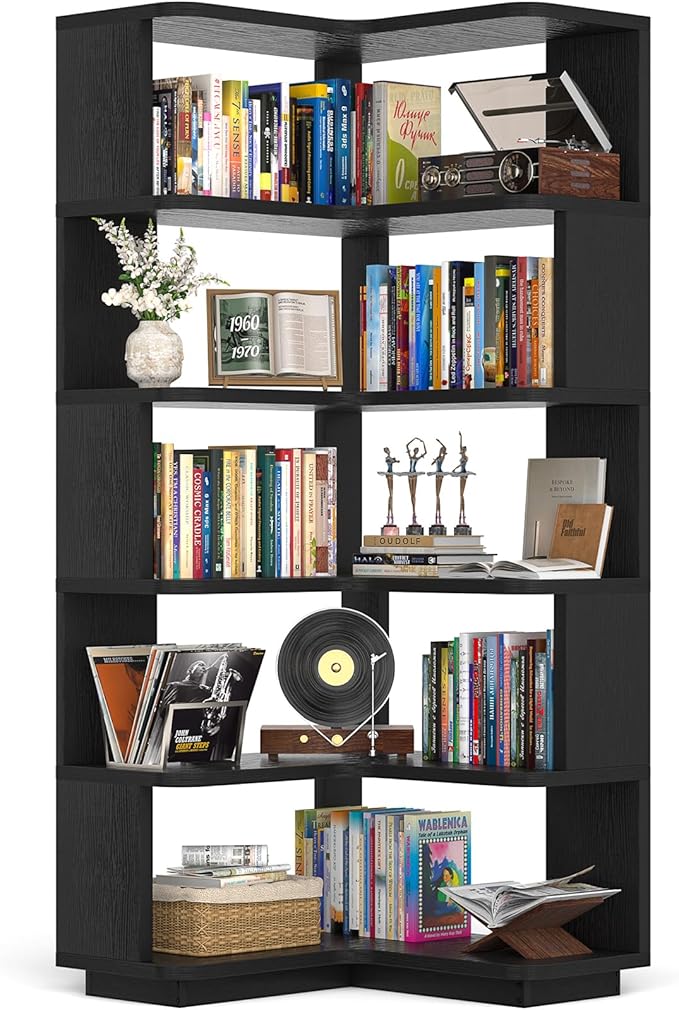
Armocity Corner Book Shelf – 6 Tier Corner Bookshelf Etagere Bookcase with Baffle
This corner bookshelf is expertly designed to utilize underused corner spaces in any room, transforming dead zones into functional storage. Its 90° angled back seamlessly fits against walls, while the tiered shelves expand outward to provide ample display/storage area without obstructing walkways, maximizing unused space while offering great stylish storage
Stack Some Books Horizontally
A bookshelf where every single book stands vertically looks like a library. That’s fine for a library but for a styled home shelf, you want variety. Stacking three to five books horizontally creates an elevated platform for a small object to sit on top, immediately adding another layer of dimension to the arrangement.
The key is restraint: one or two horizontal stacks per shelf section is intentional. Five stacks begins to look like you ran out of space. Use your horizontal stacks as deliberate pedestals, put something worth looking at on top of them, whether that’s a small plant, a candle, a sculptural object, or a tiny framed photo.
Add Light, It Changes Everything
This is the secret that separates a styled shelf from a magazine-worthy shelf. Adding a light source to your bookshelf creates atmosphere, drama, and warmth that no amount of rearranging can replicate. Even a simple battery-operated LED strip hidden along the top edge of the shelf creates a warm glow that makes the whole thing look intentional and luxurious.
Alternatively, a small LED picture light mounted above the shelf, angled downward, creates a spotlight effect that makes your decor objects look like museum pieces.
“Lighting is the jewelry of architecture. Without it, even the most beautifully styled shelf is wearing a potato sack.” — Interior Design Maxim
Top Pick — Shelf Lighting: Govee LED Strip Lights with Remote (16.4ft, Warm White 2700K) Run these along the underside of each shelf and you’ll create a warm, museum-like glow that makes every object on your shelves look intentionally curated. The 2700K warm white light is particularly flattering, it enriches wood tones, makes ceramics glow, and casts the kind of soft, golden light that makes your whole room feel like a boutique hotel. The remote means you can adjust brightness from the couch. Genuinely transformative.
Display Objects With a Story
Here’s the thing about the most beautiful bookshelves you see in design magazines, they look personal. They don’t look like a store display, they look like someone lives there. That’s because the best-styled shelves include objects that mean something: a souvenir from a trip, an inherited vase, a photo from a night you want to remember.
These objects are what make a shelf feel lived-in and layered rather than showroom-perfect. The trick is curation, not every meaningful item needs to be displayed. Choose your three or four most visually interesting personal pieces and let them anchor the shelf. Everything else can live elsewhere.
Top Pick — Personal Display: Framatic Woodline Solid Wood Picture Frame Set — 4×6 and 5×7 (Pack of 4) Small framed photos leaned against the back of a shelf (rather than hung on a wall) add an effortlessly personal, editorial quality to any arrangement. This solid wood frame set has a lovely natural grain that adds warmth and texture, comes in two sizes for that layered effect, and the lean-and-prop style means zero wall damage. Tuck one behind a stack of books or let it peek out from behind a plant, the effect is always beautifully candid.
Commit to a Color Palette for Decor Objects
While your books can be color-sorted, your decor objects need a tighter palette. Stick to three colors maximum for your decorative objects, any more and the shelf starts to feel chaotic rather than curated. Designers typically choose:
- One dominant neutral — white, cream, natural wood, or black
- One accent color — terracotta, sage, navy, or brass
- One metallic — gold, silver, or copper
Everything on the shelf that isn’t a book should fall into one of these three categories. A black frame, a gold vase, and a white ceramic perfect. A red bowl, a pink candle, a green plant pot, and a blue box, too much. Edit aggressively and the result will look dramatically more intentional.
Step Back and Edit, Then Edit Again
Designers style a shelf, step back across the room, look at it for thirty seconds, and then go in and make small adjustments. Then they step back again. Then they adjust again. This process of styling at close range and evaluating at distance is critical.
What looks balanced up close often reveals an imbalance when viewed from across the room, too much weight on one side, a gap that reads as empty rather than intentional, or a color that’s competing with everything around it.
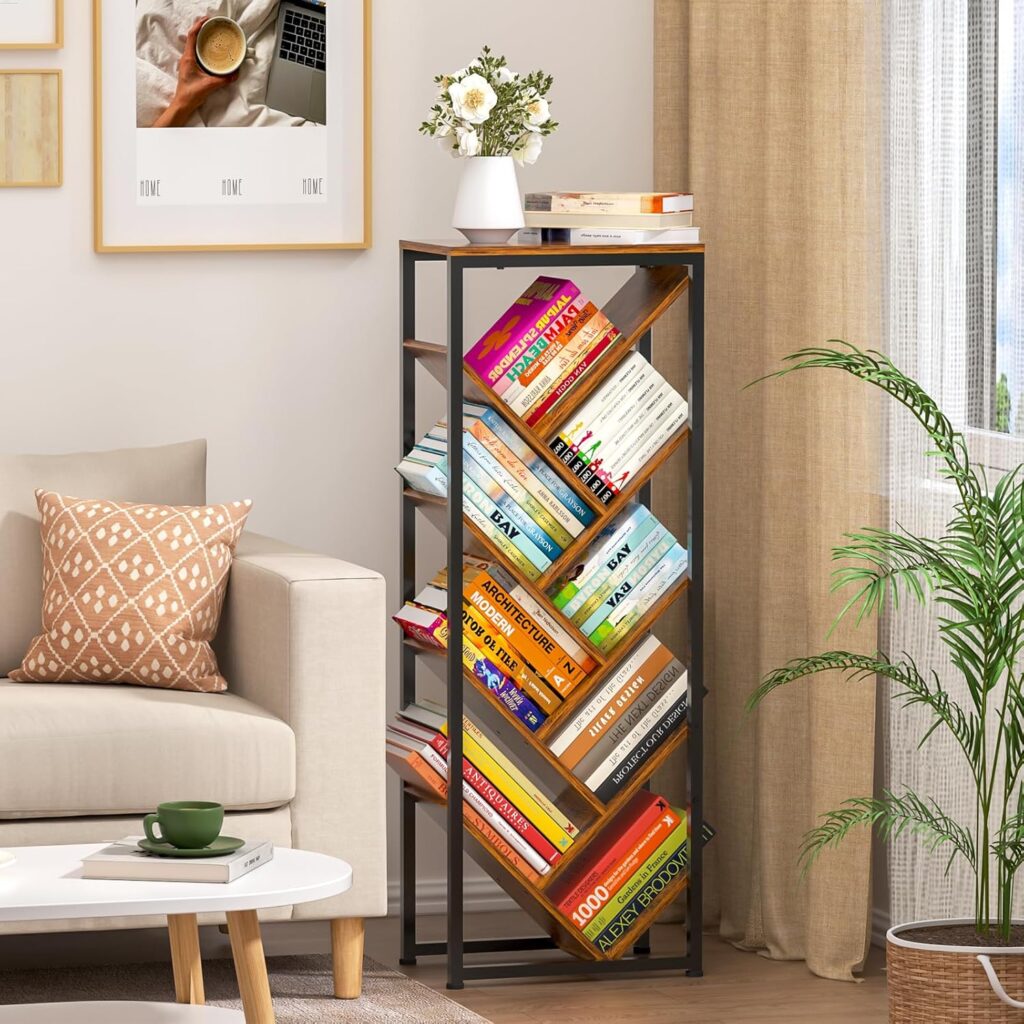
Cutogxon Tree Bookshelf – 9 Tier Floor Standing Tree Book Storage Organizer
The bookshelf suitable for Oversized Hardcover and Standard Textbook. We know that not having enough space can be annoying. That’s why we designed large space shelf stores books or other items. Perfect in any room! Works great in the bedroom or the living room. it only takes little space but meets your daily demands.
One Last Trick: Take a photo of your shelf on your phone and look at it on the screen. The camera flattens the image and reveals exactly what a visitor would see, it exposes imbalances that your eye misses in person. This is the actual trick professional stylists use on shoots.
Here’s the honest truth: there’s no such thing as a perfectly styled bookshelf that stays that way forever. Books get pulled out, objects get moved, plants grow. And that’s the beauty of it. Your bookshelf is one of the most personal, ever-evolving spaces in your home, treat it like a living display rather than a finished product, and it’ll always feel fresh.
Start with just one shelf today. Clear it, apply two or three of these tips, and step back. Once you see what a difference intentional styling makes, you won’t be able to stop.