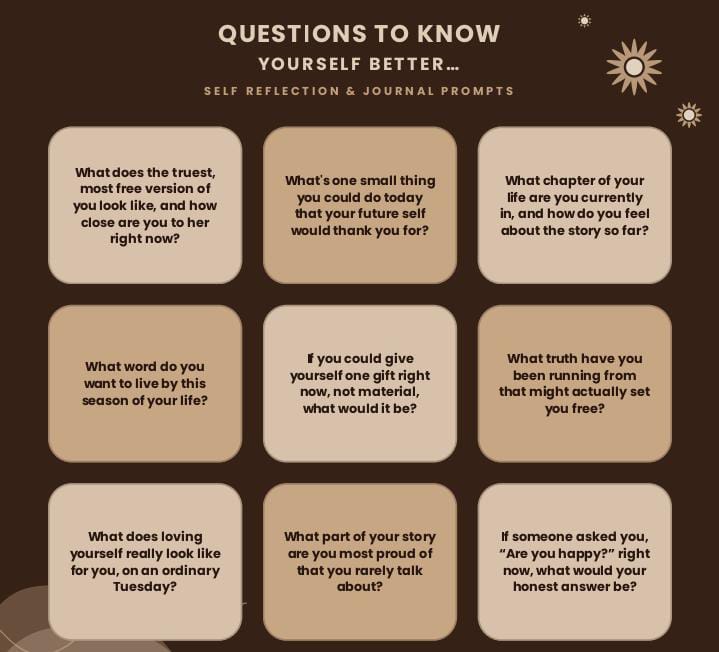
Imagine sitting in a quiet corner with a warm cup of tea, your journal open, and that weight from old childhood hurts starting to lift just a bit as you put pen to paper. I know how heavy those memories can feel; the way they sneak into your thoughts, affect your relationships, or make you question your worth. I’ve walked through my own shadows from the past, feeling that mix of pain, confusion, and a deep longing for healing. If you’re here because childhood trauma has left its mark, I see you, and I’m holding space for your story.
These 200 journal prompts are crafted with care to help you explore, process, and gently mend those wounds. But remember, friend, I’m not a therapist, and these prompts are just supportive tools for self-reflection, they’re not a replacement for professional help. If your trauma feels too much to handle alone, please reach out to a qualified counselor or therapist; they can guide you with the expertise you deserve.
As your buddy who’s passionate about personal growth and has seen how journaling can be a soft light in dark times, I want to walk with you through this. Trauma from childhood ; whether it’s neglect, abuse, loss, or something else, can shape how we see ourselves and the world, but it doesn’t have to define us forever. These prompts aren’t generic; I’ve made them thoughtful and creative to spark gentle insights without overwhelming you.
We’ll break them into categories so you can dip in where it feels right, maybe start with lighter reflections and ease into deeper ones. Pro tip: Set a safe space, breathe deep, and go at your pace; pair with therapy for best results. Let’s take those small, brave steps toward peace together. Find more journal prompts, conversation starters and affirmations here.
Table of Contents
Why Journal Prompts Can Support Healing from Childhood Trauma
Let’s chat honestly about this. Childhood trauma isn’t just “old stuff” – it can show up as anxiety, trust issues, self-doubt, or even physical tension. Journaling offers a private way to unpack it, like talking to a compassionate listener (yourself). These prompts draw from therapeutic ideas but in an accessible, empathetic form, helping you name feelings, reframe stories, and build compassion.
It’s empathetic because healing is nonlinear; some days are breakthroughs, others steps back. I’ve found prompts like these help me feel less alone, turning chaos into clarity. They’re not therapy, but a complement – use them mindfully, and seek pro support if needed. Tailor to your needs; skip what triggers. With 200, there’s plenty to explore slowly.
200 Powerful Questions for Healing Childhood Trauma.
Category 1: Gently Revisiting Early Memories
These start soft, inviting you to recall without pressure, focusing on neutral or positive glimpses to build safety.
- Hey, what’s one little happy memory from your childhood home that still puts a tiny smile on your face?
- If that kid version of you could mail a postcard to you right now, what would the picture show, and why do you think that?
- Tell me about a favorite toy or something special from back then – what kind of comfort did it give you?
- Who was that one kind person in your early days, and what made them feel like a safe spot for you?
- What’s a simple everyday thing from your childhood that you kind of miss, and how could you bring a touch of it back into your life today?
- If you could lean in and whisper something reassuring to your little self during a hard time, what would you say?
- What color takes you back to a calm day from your childhood, and what was going on then?
- Think about a book or story from when you were young – how did it light up your imagination?
- What was that outdoor place that felt like your own secret spot, and what kinds of thoughts floated through your mind there?
- Describe a family meal that had a warm feel to it – what smells or tastes stick with you?
- If your younger self sketched out what “home” looked like, what would you draw in there?
- What game or just messing around as a kid made you feel totally free, and why do you think that was?
- Who showed you how to do something little but helpful, like tying your shoes, and how did that moment feel?
- What’s a holiday memory that has even a bit of joy in it, mixed feelings and all?
- If you could quietly slip back to one ordinary day from back then, what would you just watch happen?
- What pet or animal from those days brought you some comfort, and what did you pick up from having it around?
- Paint a picture of your bedroom or that special nook – what made it feel like it was truly yours?
- What’s a song from your childhood that still plays in your head sometimes, and what feeling comes with it?
- Think about a time at school when you felt a bit proud – what was that all about?
- If your little self had a magic wand to tweak just one small thing, what would you point it at?
These ease you in with kindness.
Category 2: Exploring Hidden Emotions
These help name feelings tied to trauma, in a compassionate way to release without overwhelm.
- What feeling from your childhood keeps showing up in your life now, and where do you notice it in your body?
- If you pictured anger from back then as a color, what shade comes to mind, and what might help soften it a little today?
- Think of sadness like it was a visitor during your childhood – what do you think it really needed but didn’t get?
- What kind of fear used to whisper in your ear as a kid, and what’s a truth that pushes back against it now?
- If joy was tucked away in tiny moments from those days, what’s one you can pull out and hold onto?
- What did shame feel like – maybe a heavy coat you had to wear – and how could you start to take it off gently?
- Remember a time when everything felt confusing – what kind of clarity do you have looking back at it today?
- What did loneliness look like in your world back then, and how might building connections help mend that now?
- If guilt was like a tight knot inside, what’s a soft way to start loosening it up?
- Picture hope as this little flicker during hard times – what kept that light going, even if it was dim?
- What built those walls of resentment for you – and what’s one small brick you could pull out first?
- If peace showed up as a rare visitor in your childhood, what little things invited it in?
- What did anxiety feel like, maybe racing through you like a storm – and what’s something that anchors you in calm these days?
- Think about a moment of pride in something small you did – how does that help shape how you see yourself now?
- What betrayal really stung back then – and what steps have you taken to rebuild trust since?
- If love felt like it was in short supply, what’s a small seed of it you can water and grow today?
- Describe what relief felt like after a tough day – and what brings that same sense of ease to you now?
- What made envy creep in, comparing you to others – and how can shifting to gratitude change that view?
- If calm wrapped around you like a blanket sometimes, what helped pull it close, even if rarely?
- What sparked excitement and big dreams for you as a kid – and how can you kindle that fire again?
Tender emotional unpacking.
Category 3: Unpacking Family Dynamics
These explore family roles and impacts, with empathy for all involved.
- What kind of role did you end up playing in your family, and how does that still pop up in your life today?
- If you imagined your family like a garden, what sort of plant would you be, and what kind of care do you think it really needed?
- Tell me about one strength in a parent that you actually admire – how has that influenced who you are?
- What was that unspoken rule at home that you followed without question, and how would you rewrite it for yourself now?
- Think back to a moment with a sibling that taught you something about sharing, whether it was positive or not?
- If love was expressed through different “languages” at home, which one felt like it was missing for you?
- What holiday tradition seemed forced or awkward – and what fresh one could you start for yourself?
- Describe what “normal” looked like in your family – which parts of that feel off or unhealthy to you now?
- What words from a caregiver really stuck with you – which ones are worth holding onto, and which can you let go?
- If your family was like a team, what position did they put you in, and how did that feel?
- Remember something wise a grandparent shared – how does that still bring you a bit of comfort?
- What boundary got crossed or blurred at home – and how can you draw a clear one for yourself today?
- Paint a picture of the vibes around dinnertime – what kind of hunger was there beyond just the food?
- What was a secret you kept buried back then – and what kind of freedom might come from acknowledging it now?
- If the roles flipped and you could talk to your family as a kid, what would you say to them?
- What strength did you develop from the struggles at home that you carry with you now?
- Think about a fun family outing or moment – what bit of joy from that can you pull into your life today?
- What expectation felt like a heavy weight on you – and how can you start to shrug it off?
- If your home life was like a storybook, what character do you see yourself as in it?
- What lesson from your family sticks with you – and how are you teaching yourself a different version now?
Compassionate family reflections.
Category 4: Releasing Blame and Guilt
These guide forgiveness, starting with self, to lighten carried loads.
- What kind of blame are you still holding onto for that little version of you – and how can you start to release it?
- If guilt felt like a backpack you were carrying, what’s one thing inside it you could take out first?
- What “should have done” thoughts keep nagging at you – and what if you replaced them with “you did the best you could”?
- Think about a time you put blame on someone else – what bit of understanding might help soften that feeling?
- What would forgiving yourself look like for a choice you made back then?
- If letting go was like writing a letter, what would you say to your past to set it free?
- What guilt is tied to just surviving those times – and how was that actually a way to protect yourself?
- Picture forgiving like crossing a bridge – what would you find on the other side waiting for you?
- What loop of blame could break if you just said one kind thing to yourself right now?
- If the mistakes others made were like mirrors, what do you notice reflecting back in your own life?
- What part of your innocent self needs to hear “this wasn’t your fault” over and over?
- Remember when guilt stole away a moment of joy – how can you take that joy back now?
- What simple ritual for forgiveness could you try to bring a sense of peace?
- If blame burned like a fire inside, what could pour water on it to cool things down?
- What’s a phrase full of self-compassion that might ease some of that old guilt?
- Think of releasing things like taking flight – what heavy stuff would you drop to soar?
- What “why did this happen to me” questions can shift into “what can I do with this now” with a bit of grace?
- If guilt wrapped around you like a chain, what’s the key that could unlock it?
- What blame toward your family might fade if you added a dash of empathy for them?
- What kind of freedom is waiting for you on the other side of letting go of self-blame?
Freeing forgiveness focus.
Category 5: Building Self-Compassion
These nurture kindness toward your inner child, fostering worth.
- What gentle word would you offer to that little you if you could sit with them right now?
- If showing compassion to yourself felt like a warm hug, how would that embrace feel for your past self?
- What strength did your younger self show in those hard times that really deserves some recognition?
- Picture your inner child – what do they look like, and what kind of care are they craving from you today?
- What does “you’re enough, just as you are” really mean for that kid version of you?
- Think about a talent or something special from your childhood – how can you celebrate that part of you now?
- What act of self-love could help soothe an old wound that’s still tender?
- If kindness toward yourself was like medicine, what dose would heal your heart a little more?
- What boundary could you set today that honors and protects that inner child?
- How does seeing your worth as something you’re born with change how you feel about yourself?
- What would it be like to say “I see your pain and it’s valid” and really mean it for yourself?
- Remember a dream that got squashed back then – how can you breathe life into a piece of it now?
- What’s a soft but firm “no” you can say to protect your peace these days?
- If self-care turned into playtime, what fun activity would help your healing?
- What “you did good” message can you give yourself for making it through?
- Picture grace wrapping around you like a cozy blanket – what warmth does it bring?
- What strength from just surviving those days shines the brightest for you now?
- What can you let go of today to make room for lighter feelings?
- If love was a handwritten note to yourself, what caring words would it hold?
- What simple joy could you give to your inner child to light them up today?
Self-kindness cultivation.
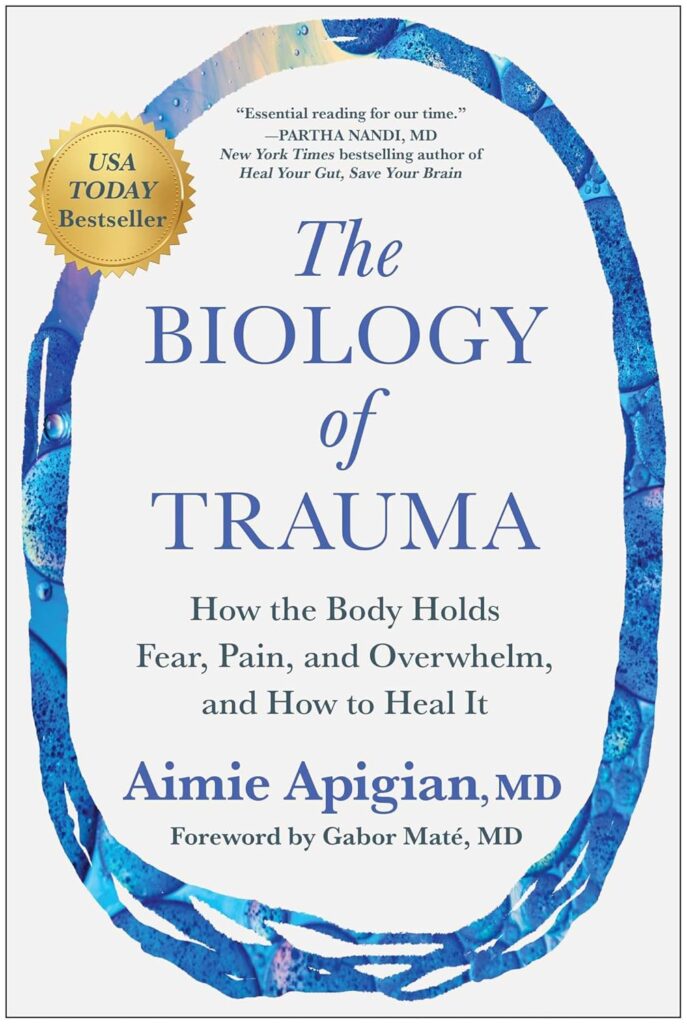
This groundbreaking book breaks down the latest research to reveal how trauma impacts our bodies on a cellular level and offers an empowering path to whole-body healing.
If we want to truly heal, we need to understand trauma as something happening inside of the body, not as a singular external event. Gaining clarity on how our bodies hold onto experiences, impacting both our physical health and our ability to maintain healthy behaviors and relationships, is crucial. That’s where Dr. Aimie Apigian’s integrative, revolutionary approach comes in.
Category 6: Redefining Relationships
These help reframe current bonds through trauma lens.
- What pattern from back then keeps showing up in your relationships now – and how can you gently shift it?
- If building trust felt like putting up a bridge, what’s one small step you could take to start?
- Describe what healthy love looks like to you – and how does that differ from what you knew growing up?
- What boundary in your friendships would really honor where you’re at in your healing?
- Think about a relationship that echoes something from your past – what change could make it healthier?
- What’s an “I need this” in your connections that feels scary to say but totally true?
- If getting close to someone was like a dance, what step feels right for you?
- What does forgiveness look like in your love life, and how might it set you free?
- Describe the kind of support you craved as a kid – and how can you ask for something like that now?
- What warning sign from your trauma do you recognize quicker these days?
- What’s a positive sign that tells you a connection feels safe and good?
- If being open was like turning a key, what door to a better relationship might it unlock?
- What goal for your relationships would help soothe those old hurts?
- How can you bring empathy to your partner’s past, just like you’re doing for yours?
- What does shifting from “me” to “we” look like in building a team with someone?
- What way of handling arguments from home could you update to something kinder now?
- If love was spoken in different ways, which “language” do you need more of in your life?
- What’s a date idea that could nurture that inner child part of you?
- How does seeing commitment as a safe place change things for you?
- What does “together through it all” really mean after working through trauma?
Relational renewal.
Category 7: Cultivating Inner Strength
These empower resilience from trauma.
- What kind of inner strength bubbled up from those hard times in your childhood?
- If your strength was like a tree, what deep roots keep you steady now?
- Think of surviving as your own superpower – how can you use it in positive ways today?
- What big lesson from the pain guides the choices you make now?
- Remember a time you came out stronger after a loss – what pride do you feel in that?
- What’s an “I can handle this” that pushes back against old “I can’t” thoughts?
- If building resilience was like working a muscle, how can you give it a good flex?
- What boundary helps boost your sense of power and control?
- Picture your growth like a butterfly emerging – what beautiful wings have you earned?
- What kind of self-trust is growing as you heal from those early experiences?
- What’s a firm “no more of that” that declares your strength loud and clear?
- If your voice was a tool for change, what truth would you speak out?
- What dream got buried back then but is ready to rise up now?
- How does courage show up as a choice you make every day?
- What network of support makes you feel even stronger?
- What’s a “rise above it” phrase that empowers you when things get tough?
- If your healing journey was a path, what’s a milestone you’re proud to have reached?
- What joy have you reclaimed that lights up your spirit these days?
- Picture freedom like standing under an open sky – what does that openness feel like?
- What’s an “I am strong because…” that you can affirm to yourself every day?
Empowerment emphasis.
Category 8: Integrating Mind-Body Healing
These connect physical sensations to emotional work.
- Where in your body do you feel the echoes of trauma – and what’s a gentle way to soothe that spot?
- If taking a deep breath was like building a bridge to calm, what does that calm place look like for you?
- Describe a kind of movement or stretch that helps release those stuck feelings inside?
- What sensory memory triggers something from the past – and how can you reframe it with kindness?
- Think back to a time your body felt safe – how can you get back to that feeling now?
- What kind of touch or self-hug brings you comfort in the present moment?
- If built-up tension was like a knot, what’s a soft way to start working it loose?
- How does giving yourself real rest feel like a healing balm for your whole self?
- What’s a food or meal that nourishes not just your body but that inner part of you too?
- What sound or noise helps calm those old fears when they creep in?
- If your body was a map of your experiences, what’s the path leading you to peace?
- What simple stretch or pose opens up space in your heart for healing?
- Describe sleep as a time for your body to repair – what helps you rest deeper?
- What’s a ritual with water, like a bath or shower, that washes away some of the pain?
- Remember a hug that felt truly safe – what can bring that same warmth now?
- What scent takes you to a place of calm and healing?
- If moving your body was like a dance of freedom, what steps would set you free?
- How does grounding yourself, like feeling your feet on the earth, root you in the present?
- What kind of light or warmth helps brighten those darker inner places?
- What’s a “yes” your body gives when it feels safe and secure?
Holistic integration.
Category 9: Visioning a Healed Future
These look ahead with hope.
- What does a healed version of you look like going about a regular day?
- If your future self sent you a note of encouragement, what would it say?
- Picture a day where those trauma shadows don’t follow you – what does it feel like?
- What’s a big dream or goal you have once more healing has happened?
- Think about a spark of hope from back then – how can you turn it into a flame now?
- What kind of relationships thrive when you’re coming from a healed place?
- If peace was your new home, what would make it feel cozy and right?
- Describe joy as a close friend who’s always around – how does that change things?
- What career or path calls to your heart once you’ve healed more?
- What hobby or passion could bloom once you’re feeling freer?
- If love came easy without the old fears, what would that openness feel like?
- Picture the kind of family or close circle you’d build from a healed heart?
- What adventure is waiting for your spirit once it’s unburdened?
- What “I deserve this” can you claim right now as part of your healing?
- If your strength became a legacy, what would you pass on to others?
- Describe calm as your everyday normal – what does that peace look like?
- What community or group would you join or create once healed?
- What can you thank your past for, in terms of the lessons it’s taught you?
- Picture the light at the end of the tunnel – what’s waiting there for you?
- What does “I am whole” really mean and feel like for you?
Hopeful horizons.
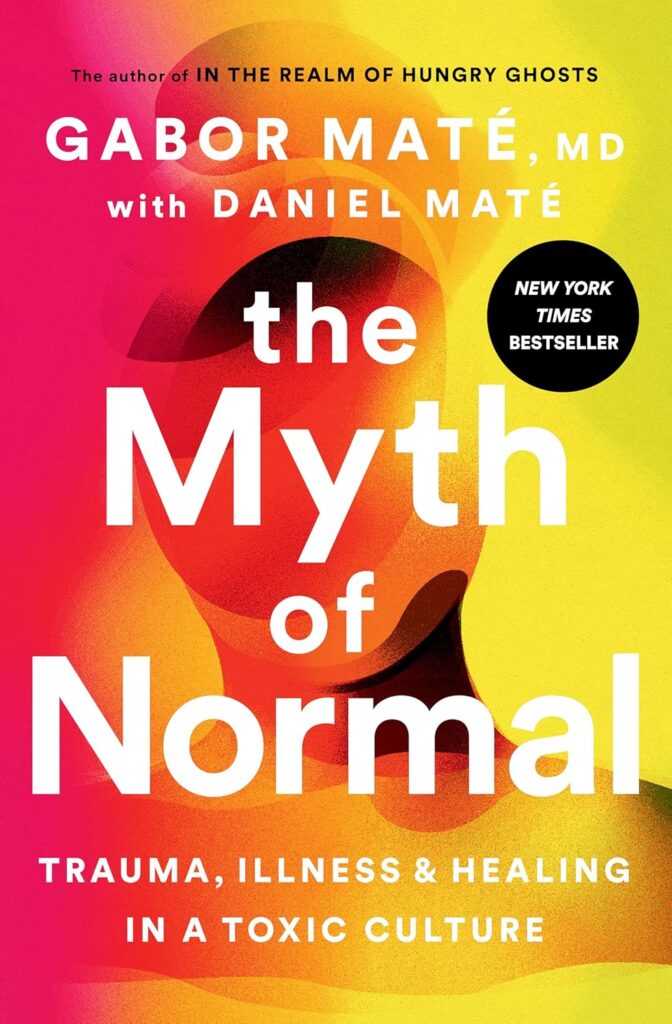
The Myth of Normal: Trauma, Illness, and Healing in a Toxic Culture
By the acclaimed author of In the Realm of Hungry Ghosts, a groundbreaking investigation into the causes of illness, a bracing critique of how our society breeds disease, and a pathway to health and healing.
Category 10: Daily Integration and Gratitude
These ground healing in present.
- What’s one small win from today that shows you’re honoring your healing?
- If gratitude was the key to more good things, what does it unlock for you?
- Describe this moment right now as part of your healing story.
- What self-care thing can you do today to be kind to yourself?
- Think of a gentle word you said to yourself recently – how can you say it again?
- What boundary did you set or hold today that felt good?
- If your progress was like a flower opening, what’s starting to bloom?
- How does focusing on your breath anchor you in the here and now?
- What’s a little spark of joy you noticed today?
- What did you let go of today that made room for lighter feelings?
- If your mirror could talk back, what kind thing would it say to you?
- Describe giving yourself rest as a gift you truly deserve.
- What support from a friend are you grateful for right now?
- What can you thank your body for, in terms of its strength and resilience?
- If today was a blank page in your story, what would you write on it?
- Picture winding down at night with a sense of peace – what helps you get there?
- What seeds of dreams are you planting in your life today?
- What does “I choose myself” look like in your actions right now?
- How does seeing growth as a daily gift change your outlook?
- What affirmation like “healing is happening” can you hold onto today?
Present practice.
Healing Companions Recommendations
To aid your journaling, check these:
- The Body Keeps the Score by Bessel van der Kolk – Trauma insights. Available on Amazon
- Healing from Hidden Abuse by Shannon Thomas – Recovery guide. Grab it here
- Guided Journal for Healing Trauma – Prompt-filled. On Amazon
- Essential Oils Kit for Calm – Aromatherapy aid. Check it out
Your Healing Path: You’re Not Alone
Whew, 200 prompts to guide your gentle healing from childhood trauma. Take it slow, be kind to yourself, and remember, this is your journey. You’ve got strength within, reach for help when needed.