Have you ever had one of those moments where a single idea suddenly makes the world look different? Where the mental models you’ve always used to navigate life seem to shift, and suddenly, new paths become visible? That feeling, of your mind stretching in the best possible way is what we’re after. In an age of algorithms that feed us what we already believe, challenging your own thinking is a radical act of self-care.
This isn’t about reading what everyone else is reading. It’s about finding those slightly off-the-radar, profoundly impactful books that don’t just add information to your brain, but rewire its circuitry. The five books below are my personal arsenal of mind-expanders. They’ve challenged my assumptions, made me uncomfortable in productive ways, and ultimately, given me a richer, more nuanced lens through which to see everything.
Let’s find the book that will become your next mental upgrade. Also, find more posts with books to read or add to your to read list here.
Table of Contents

5 Books that Will Challenge your Worldview
1. The Scout Mindset: Why Some People See Things Clearly and Others Don’t by Julia Galef
We all pride ourselves on being rational. But what if the very way we think is designed to protect our egos rather than find the truth? Julia Galef, co-founder of the Center for Applied Rationality, introduces a powerful metaphor: the Soldier vs. the Scout.
Why It’s a Game-Changer:
Galef argues that most of us operate with a “soldier mindset”, our brains defend our beliefs at all costs, seeking to win arguments and protect our identity. The “scout mindset,” however, is about curiosity. Its sole mission is to map the territory as accurately as possible, even if that reveals an enemy fort where you wished there was none. This book is a masterclass in intellectual humility, teaching you how to want to be wrong because it means you’ve just gotten less wrong.
What Makes It Unique:
While books on cognitive biases can leave you feeling doomed, The Scout Mindset is empowering and practical. It provides concrete tools to cultivate curiosity, recognize motivated reasoning in yourself, and update your beliefs based on evidence. It’s not about being smarter; it’s about being more objective. This shift changes how you approach debates, decisions, and personal growth.
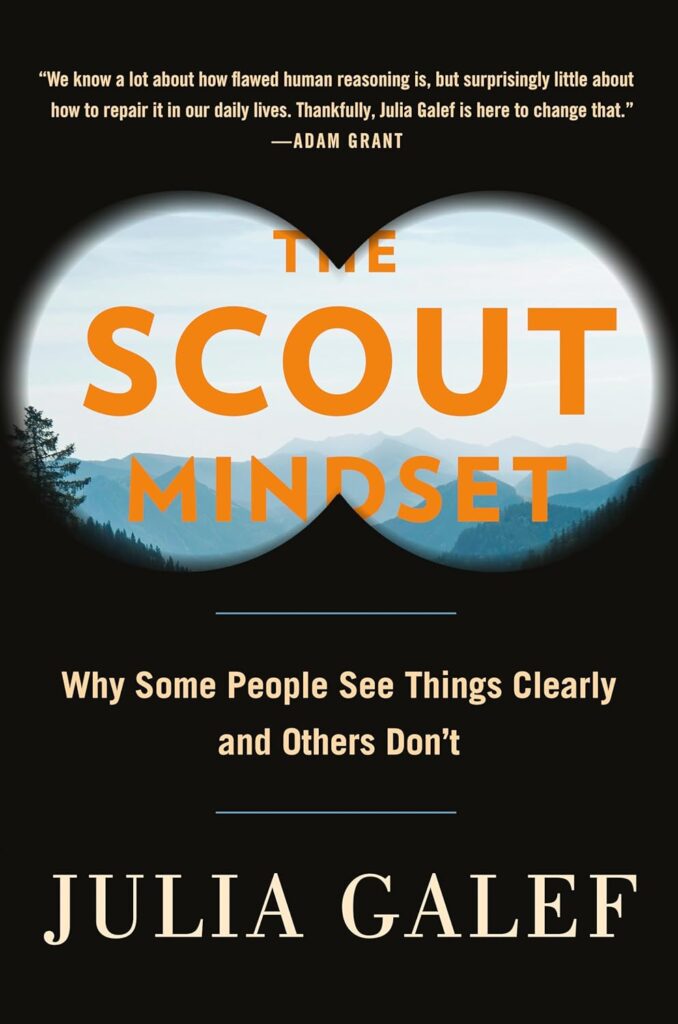
In The Scout Mindset, Galef shows that what makes scouts better at getting things right isn’t that they’re smarter or more knowledgeable than everyone else. It’s a handful of emotional skills, habits, and ways of looking at the world—which anyone can learn. With fascinating examples ranging from how to survive being stranded in the middle of the ocean, to how Jeff Bezos avoids overconfidence, to how superforecasters outperform CIA operatives, to Reddit threads and modern partisan politics, Galef explores why our brains deceive us and what we can do to change the way we think.
A Small Practice from Its Pages:
Try “The Double Standard Test.” When you find yourself strongly defending a belief, ask: “If another person held this belief, what evidence would I require of them to change my mind?” Now, honestly apply that standard to yourself. This simple question short-circuits your inner soldier and activates your inner scout.
2. Thinking in Systems: A Primer by Donella H. Meadows
Feeling overwhelmed by the complexity of the world, climate change, politics, organizational chaos? Donella Meadows, the pioneering environmental scientist, gifts us with the foundational skill of the 21st century: systems thinking.
Why It’s a Game-Changer:
We are trained to think in linear, cause-and-effect chains. Systems thinking shatters that. It teaches you to see the world as a web of interconnected feedback loops, stocks, and flows. Suddenly, you stop looking for “the one cause” of a problem and start seeing the structure that produces it. Why do well-intentioned policies backfire? Why does pushing for growth lead to collapse? This book gives you the mental models to understand.
What Makes It Unique:
Meadows writes with breathtaking clarity about profoundly complex ideas. Using accessible examples from ecology, economics, and daily life, she makes systems thinking feel like a superpower you can actually learn. You’ll never look at a traffic jam, a failing business, or your own habits the same way again. You’ll start seeing the structures behind the events.
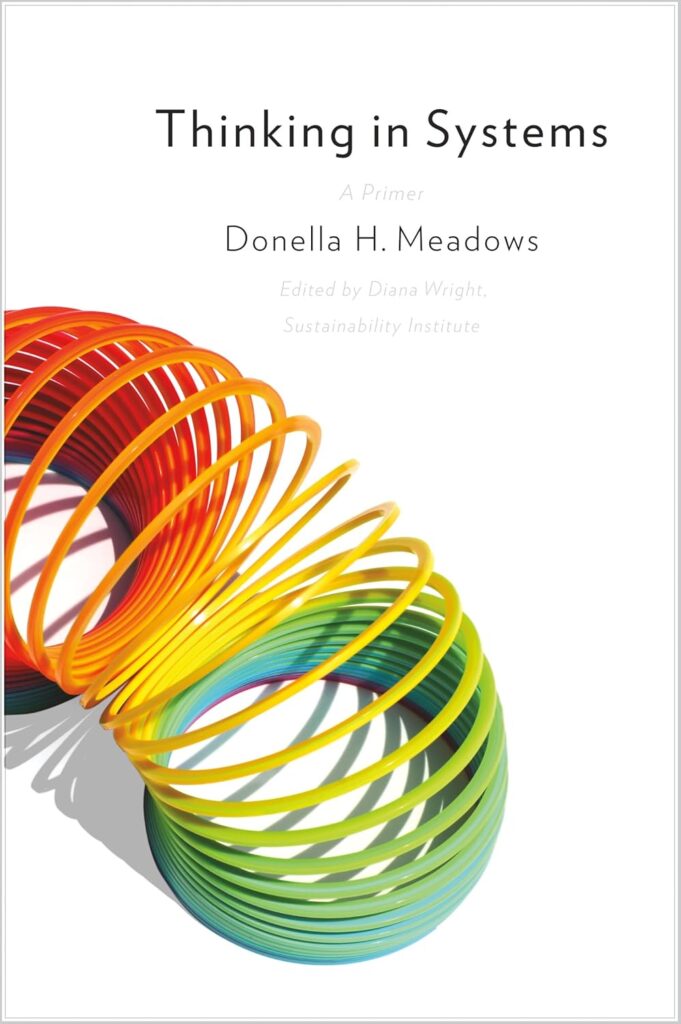
Thinking in Systems is a concise and crucial book offering insight for problem solving on scales ranging from the personal to the global. Edited by the Sustainability Institute’s Diana Wright, this essential primer brings systems thinking out of the realm of computers and equations and into the tangible world, showing readers how to develop the systems-thinking skills that thought leaders across the globe consider critical for 21st-century life.
A Small Practice from Its Pages:
Look for a “Feedback Loop.” In a recurring problem in your life (e.g., constant procrastination), identify the reinforcing loop. Perhaps stress leads to avoidance (procrastination), which leads to more last-minute pressure, which increases stress. Seeing the loop is the first step to finding a “leverage point” (a concept she famously outlines) to change the entire system.
3. Stolen Focus: Why You Can’t Pay Attention and How to Think Deeply Again by Johann Hari
You know the feeling: you sit down to read or think, and your brain feels like a browser with 100 tabs open. Johann Hari’s investigative masterpiece argues this isn’t your personal failing. It’s the result of a systematic theft of our attention.
Why It’s a Game-Changer:
Hari moves beyond the typical “quit social media” advice. He travels the world, interviewing experts to identify twelve deep causes of our collective attention crisis, from declining sleep and poor nutrition to the fundamental design of “surveillance capitalism.” The book reframes your inability to focus not as a lack of willpower, but as a logical response to a hijacked environment. This shift from self-blame to systemic understanding is profoundly liberating.
What Makes It Unique:
The book is a compelling narrative that reads like a thriller about your own mind. It challenges the core economic and technological narratives of our time. Most importantly, it doesn’t just diagnose the problem; the final third is a hopeful, practical guide on how to reclaim your focus and, with it, your capacity for sustained, deep thought—the very foundation of thinking differently.
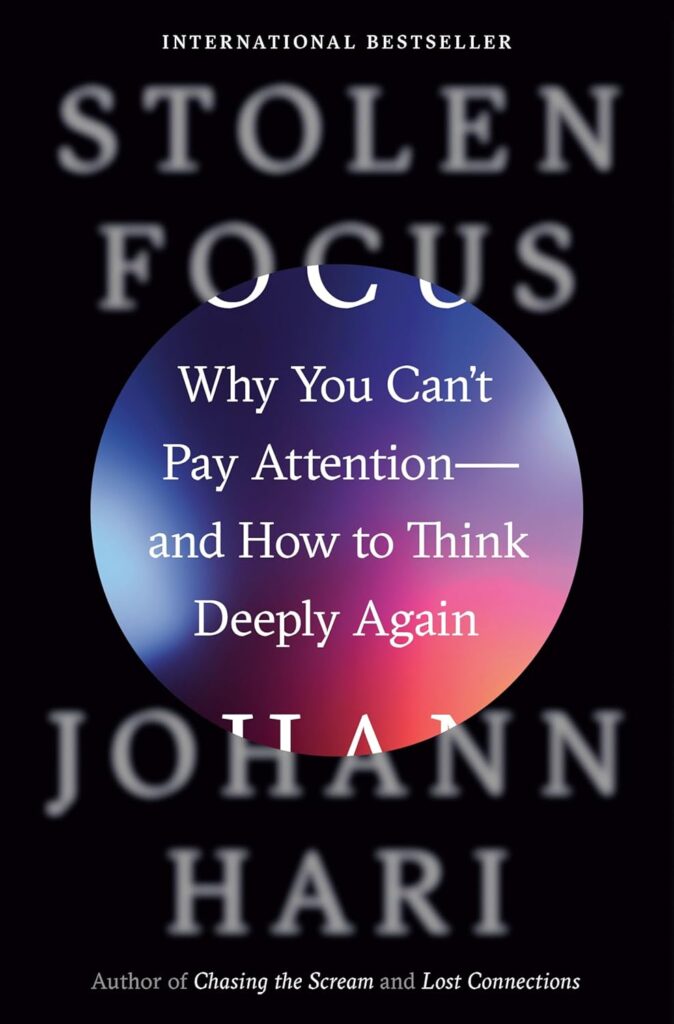
In the United States, teenagers can focus on one task for only sixty-five seconds at a time, and office workers average only three minutes. Like so many of us, Johann Hari was finding that constantly switching from device to device and tab to tab was a diminishing and depressing way to live. He tried all sorts of self-help solutions—even abandoning his phone for three months—but nothing seemed to work. So Hari went on an epic journey across the world to interview the leading experts on human attention—and he discovered that everything we think we know about this crisis is wrong.
A Small Practice from Its Pages:
Embrace “Single-Tasking Sprints.” For one 20-minute period today, do only one thing. If you’re reading, your phone is in another room. If you’re walking, you have no headphones. Train your brain to resist the constant pull of switching. This is a small act of rebellion against a system designed to fragment your attention.
4. The Ends of the World: Volcanic Apocalypses, Lethal Oceans, and Our Quest to Understand Earth’s Past Mass Extinctions by Peter Brannen
To think differently, sometimes you need a perspective that is literally cosmic. Science journalist Peter Brannen takes you on a breathtaking tour of Earth’s five previous mass extinctions. It’s the ultimate lesson in scale, time, and humility.
Why It’s a Game-Changer:
In our daily lives, we operate on human-scale time. This book yanks you out of that, placing human existence on the 4.5-billion-year timeline of our planet. You’ll learn about worlds where CO2 levels were unimaginably high, where microbes turned oceans toxic, and where 96% of all life died. It radically reframes the current climate crisis not as an unprecedented “end of the world,” but as a urgent, human-caused event within a deep history of planetary catastrophe and regeneration.
What Makes It Unique:
Brannen writes with a poet’s awe and a reporter’s precision. The book is less about doom and more about profound wonder. It challenges the anthropocentric view that we are the center of the story. By understanding how the planet’s systems have wildly fluctuated, you gain a new, more resilient perspective on change, crisis, and our species’ place in a vast, ancient, and indifferent universe.

Many scientists now believe that the climate shifts of the twenty-first century have analogs in these five extinctions. Using the visible clues these devastations have left behind in the fossil record, The Ends of the World takes us inside “scenes of the crime,” from South Africa to the New York Palisades, to tell the story of each extinction. Brannen examines the fossil record—which is rife with creatures like dragonflies the size of sea gulls and guillotine-mouthed fish—and introduces us to the researchers on the front lines who, using the forensic tools of modern science, are piecing together what really happened at the crime scenes of the Earth’s biggest whodunits.
A Small Practice from Its Pages:
Practice “Deep Time Walking.” On your next walk, mentally map the Earth’s history onto your route. If your 1-mile walk represents 4.5 billion years, complex life appears in the last few hundred feet. The entirety of human history is the width of your final footstep. This simple exercise can dissolve daily anxieties and foster a grander, more patient view of existence.
5. I Never Thought of It That Way: How to Have Fearlessly Curious Conversations in Dangerously Divided Times by Mónica Guzmán
Thinking differently isn’t just an internal exercise; it’s tested and refined in conversation, especially with those who disagree with us. Mónica Guzmán, a journalist with liberal parents and conservative brothers, offers a stunningly simple, powerful framework for bridging divides.
Why It’s a Game-Changer:
In our polarized world, we are taught to see “the other side” as a monolith of wrongness. Guzmán flips the script. She argues that the best way to understand complex issues and our own blind spots is through “curious conversation.” The goal isn’t to win or even convince, but to understand why a smart, good person you care about holds a view that seems crazy to you. This book challenges the very foundation of how we engage in conflict.
What Makes It Unique:
This is a field guide, not a theory. Guzmán provides specific phrases, questions, and mindsets for de-escalating heated talks and uncovering shared humanity. It challenges you to think differently about disagreement itself, to see it not as a threat, but as a source of crucial information about the world and yourself. It’s the most practical book on empathy and critical thinking combined.
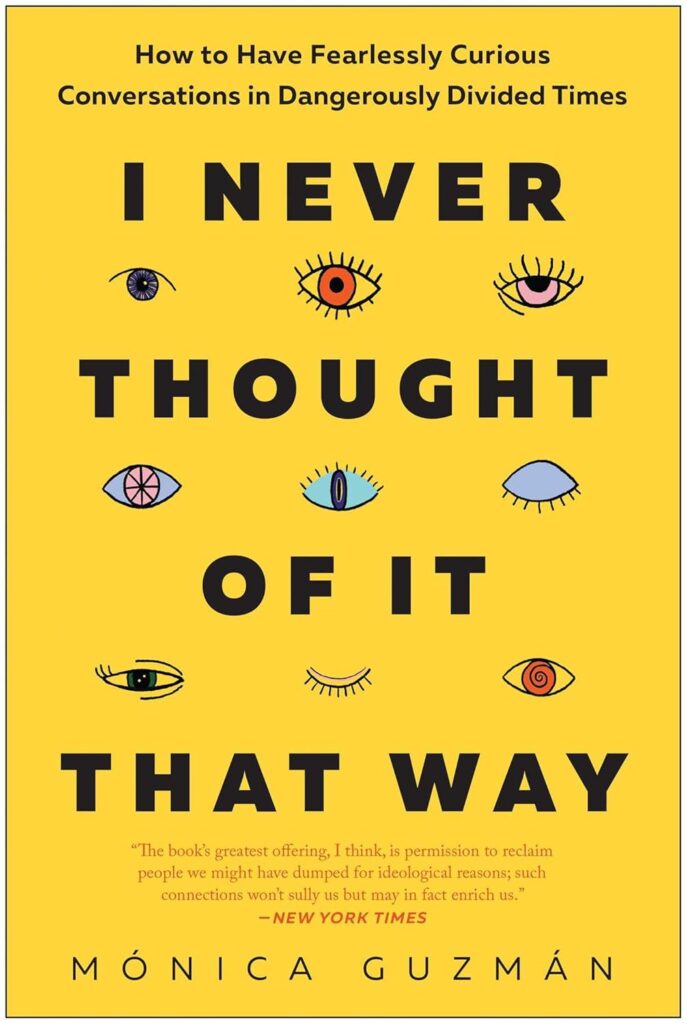
Whether you’re left, right, center, or not a fan of labels: If you’re ready to fight back against the confusion, heartbreak, and madness of our dangerously divided times—in your own life, at least—Mónica’s got the tools and fresh, surprising insights to prove that seeing where people are coming from isn’t just possible. It’s easier than you think.
A Small Practice from Its Pages:
Use the “I’m Curious” Starter. Instead of stating a rebuttal (“Here’s why you’re wrong…”), lead with genuine curiosity. Try: “I’m curious, what’s a personal experience that led you to that belief?” or “Help me understand, what’s the core value behind your position on this?” This questions the story behind the stance, opening doors instead of slamming them.
Embrace the Uncomfortable Leap
Thinking differently is inherently uncomfortable. It means venturing to the edge of your mental map, where the familiar landmarks fade. But that’s where growth happens. That’s where you find clarity, creativity, and a deeper connection to a complex, wondrous world.
Pick one book that intrigues you or perhaps the one that makes you slightly defensive. That’s often the one you need most. Read it slowly. Let it unsettle you. Wrestle with it. The goal isn’t to agree with every word, but to give your mind the rigorous, generous workout it deserves.